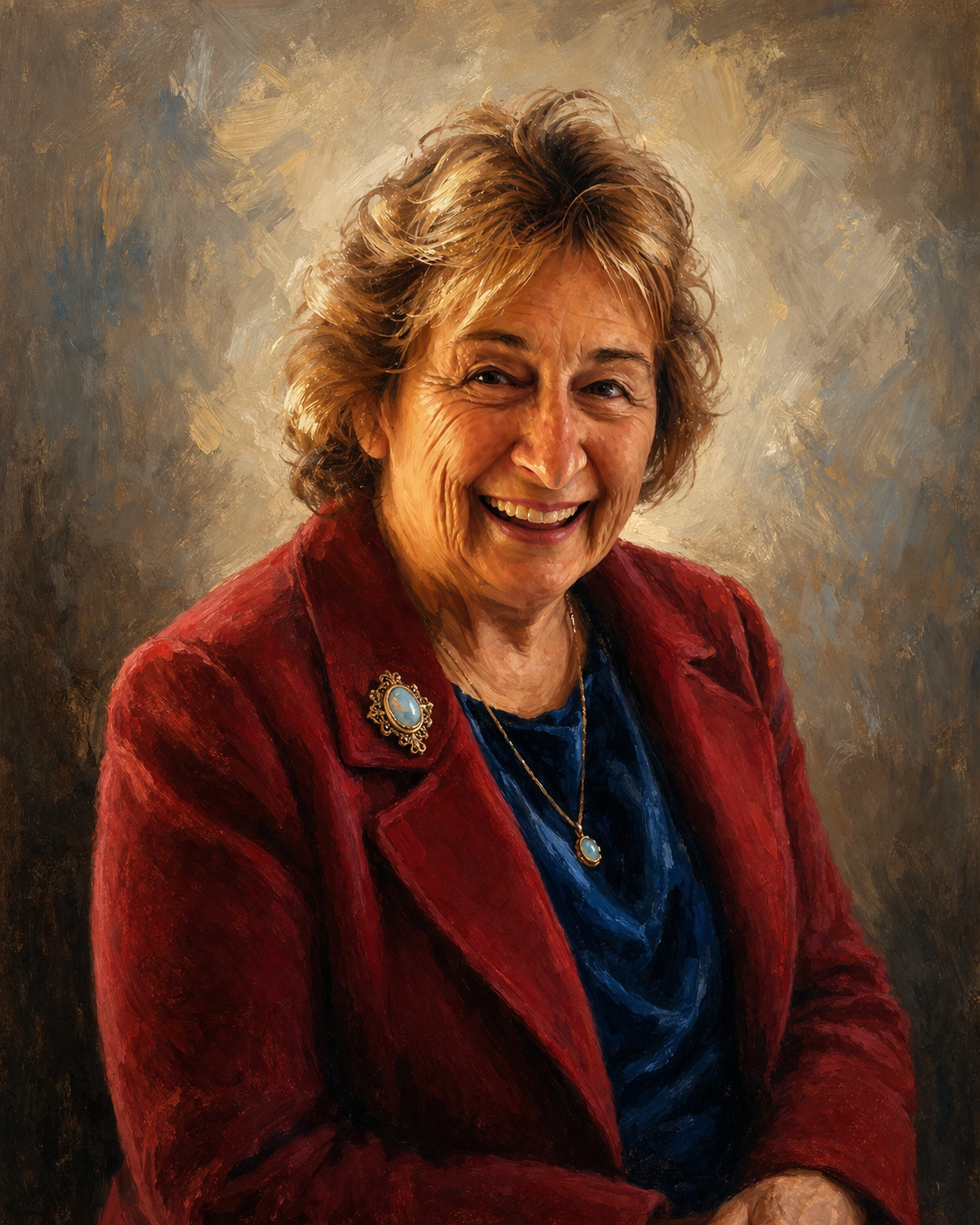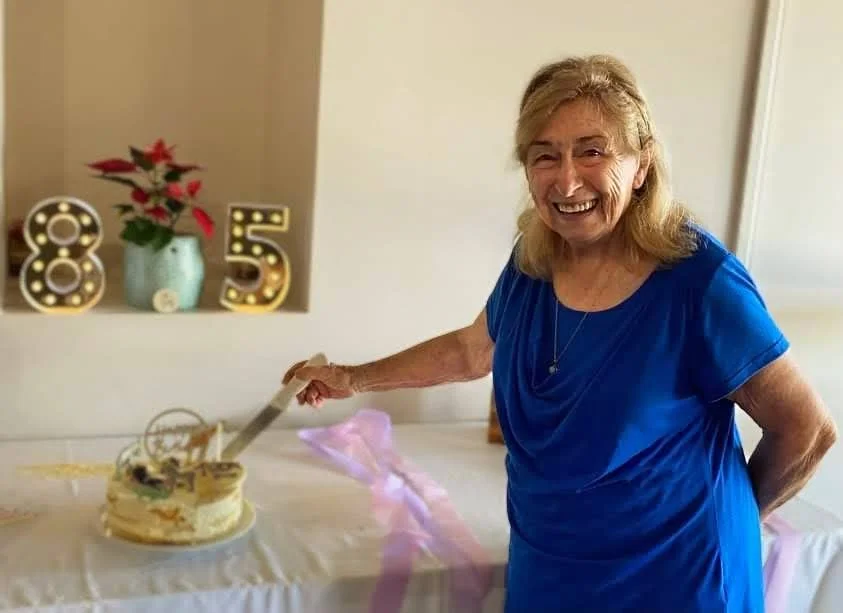
Lorraine on her 85th birthday.The Lorraine Foundation was born from a deep admiration for the life and legacy of Lorraine Saltmarsh, a remarkable artist and compassionate soul who brought joy and creativity to countless Australian communities.
Lorraine’s life is a testament to the transformative power of play, laughter, music, art, and imagination. Through her work and countless community initiatives, she nurtured a love of creativity and inspired generations to embrace the beauty of self-expression.
Lorraine believes that every child deserves the chance to dream, explore, and heal through creativity, no matter their circumstances. Her unwavering commitment to helping others, coupled with her passion for the arts, has shaped the mission of The Lorraine Foundation.
Today, we carry forward Lorraine’s vision by bringing the joy of art and reading to disadvantaged children and those experiencing crisis or trauma. We understand how vital these experiences are for building resilience, fostering emotional well-being, and helping children regain a sense of normalcy and hope.
Through our programs, we honour Lorraine’s legacy, ensuring that her love for imagination and creativity continues to brighten young lives across Australia.
An Inspirational Life.
Lorraine Margaret Saltmarsh.
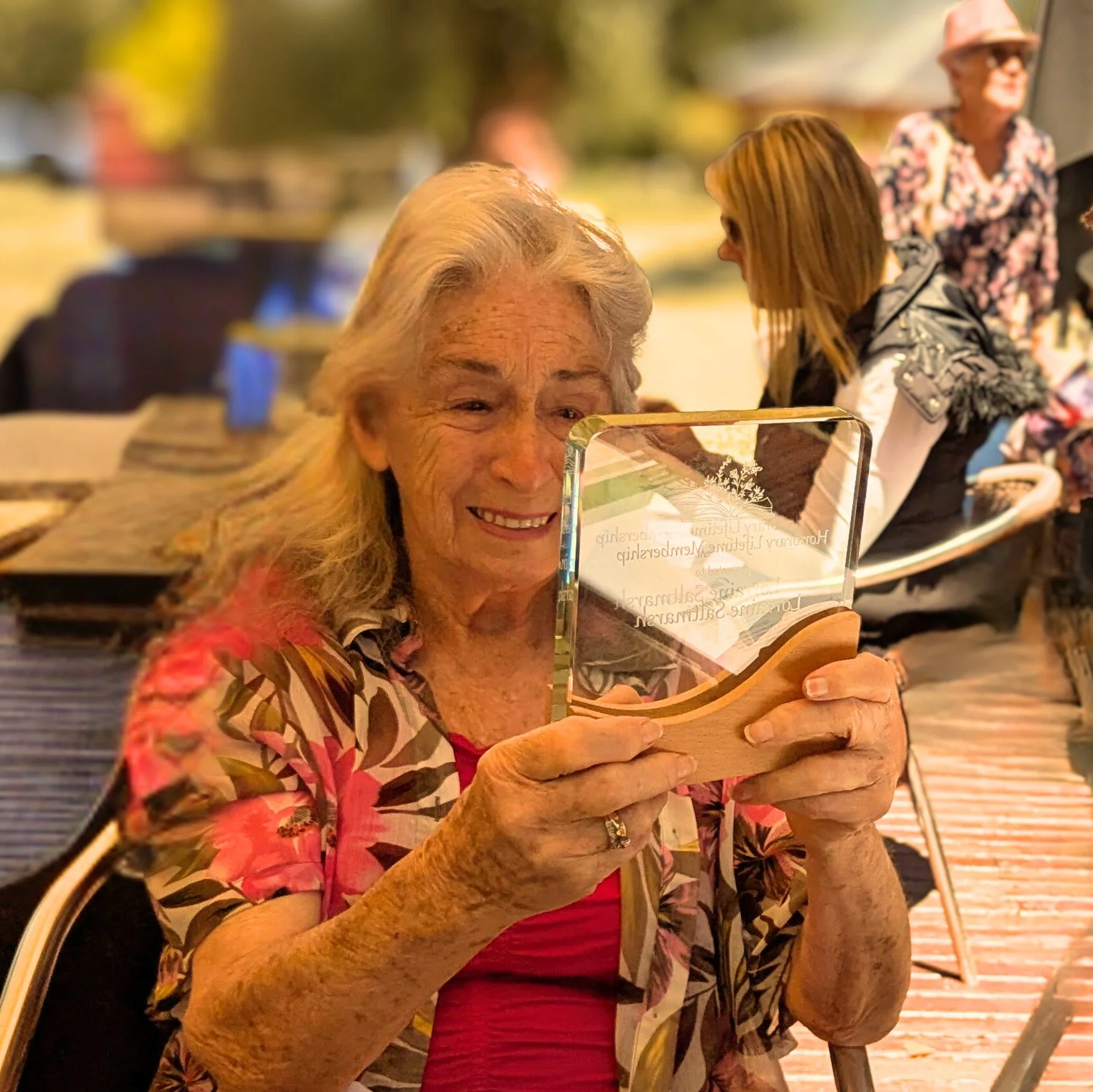
Lorraine (86) receiving her Honorary Lifetime Membership (2025).A Life Forged in the Australian Bush
Lorraine Margaret Saltmarsh (née Murphy) was born in 1938, and her story begins in the remote gold-mining settlement of Gaffney’s Creek — a rugged pocket of Victoria’s high country where resilience was not a virtue spoken about, but a way of life.
Alongside her five siblings, Lorraine grew up in a community without electricity or running water, where ingenuity, humour, and hard work shaped each day. Her childhood was formed by the bush, by family, by resourcefulness, and by the kind of practical cooperation that small communities depend on.
Her father, a man remembered for his warmth and inventiveness, was a defining influence. Family legend tells how he made their cabin the first in the settlement with running water by diverting a nearby stream using dynamite borrowed from the local mine. It is a story that has been retold for generations — not simply because it is colourful, but because it captures something essential about the world Lorraine came from: when something was needed, people found a way.
That same spirit would stay with her throughout her life.
Even as a child, Lorraine showed signs of leadership and service. At just twelve years old, with so few children in the settlement, she volunteered to teach the youngest students at the local school. It was an early example of a pattern that would continue for decades: seeing a need, stepping forward, and helping others grow in confidence.
At fourteen, Lorraine left Gaffney’s Creek for Melbourne and began her working life at Healings, where she handled invoicing and administration for the company’s growing international logistics operations. There, she saw the arrival of computers and electronic systems into Australian workplaces (a new era of record-keeping, accounting, and trade) and met it with curiosity rather than hesitation.
Sociable, energetic, and community-minded, Lorraine became involved in workplace life, organising social activities at the Queen Victoria Market and pursuing new interests with enthusiasm. She represented Victoria in basketball at the National Championships and later became involved in competitive cycling through the 1970s, an interest that would develop into a lasting contribution to local sporting life.
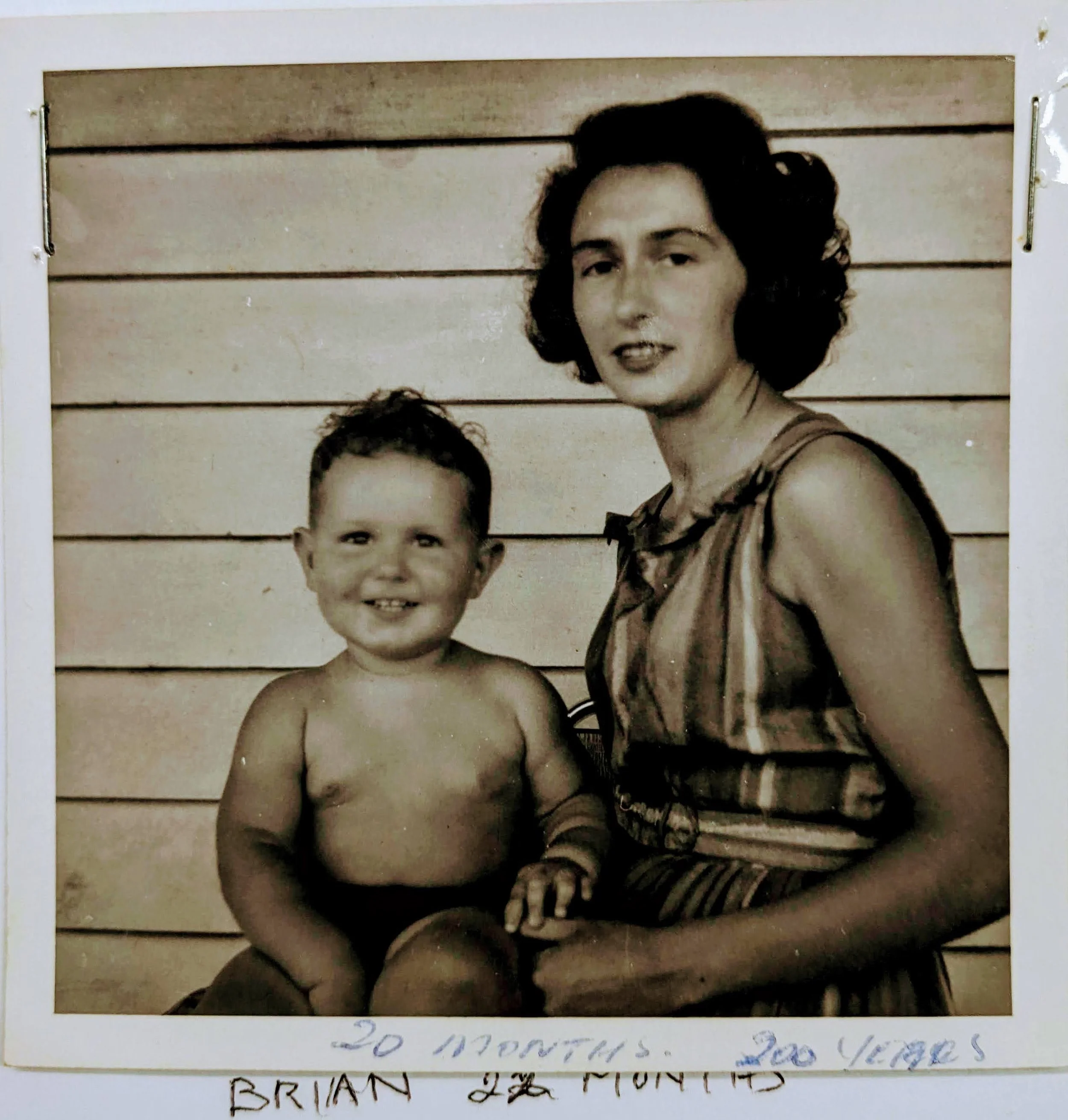
Lorraine with (son) Brian c. 1960sBuilding a Life and a Legacy
While in Melbourne, Lorraine met Maxwell Donald Saltmarsh at Leggott’s Dance Hall. Their partnership flourished, leading to marriage and a move to Cobram–Barooga in the Riverina, where they helped care for Max’s elderly grandparents and began building a life deeply connected to community.
In Cobram, Lorraine took on the role of Probation Officer, focusing on youth and family support. It was an early expression of her compassion and sense of social responsibility. She later became a foster carer, opening her home to children in need of safety, stability, and care.
Lorraine and Max soon welcomed their children, Brian and Diane. Together, they became well-known members of the local community. Max was respected as a builder, while Lorraine threw herself into civic, sporting, charitable, and cultural life. She was involved in Girl Guides, Cub Scouts, Cobram High School P&C activities, community fundraising, and local service organisations. She also spent more than a decade collecting for the Royal Children’s Hospital Good Friday Appeal, one of many quiet commitments that became part of a lifetime of service.
Her contribution to local sport was recognised early. Through her involvement with the Cobram Amateur Cycling Club, Lorraine supported the life of the club and the community around it. She was awarded Life Membership in 1977 for meritorious service, reflecting the depth of her contribution beyond her own participation. A certificate from the period also records her raising funds for the Yarrawonga Cobram Cycling Club and the Melbourne Children’s Hospital through a 450-mile marathon ride — one documented example of the energy and generosity she brought to local sport and charity.
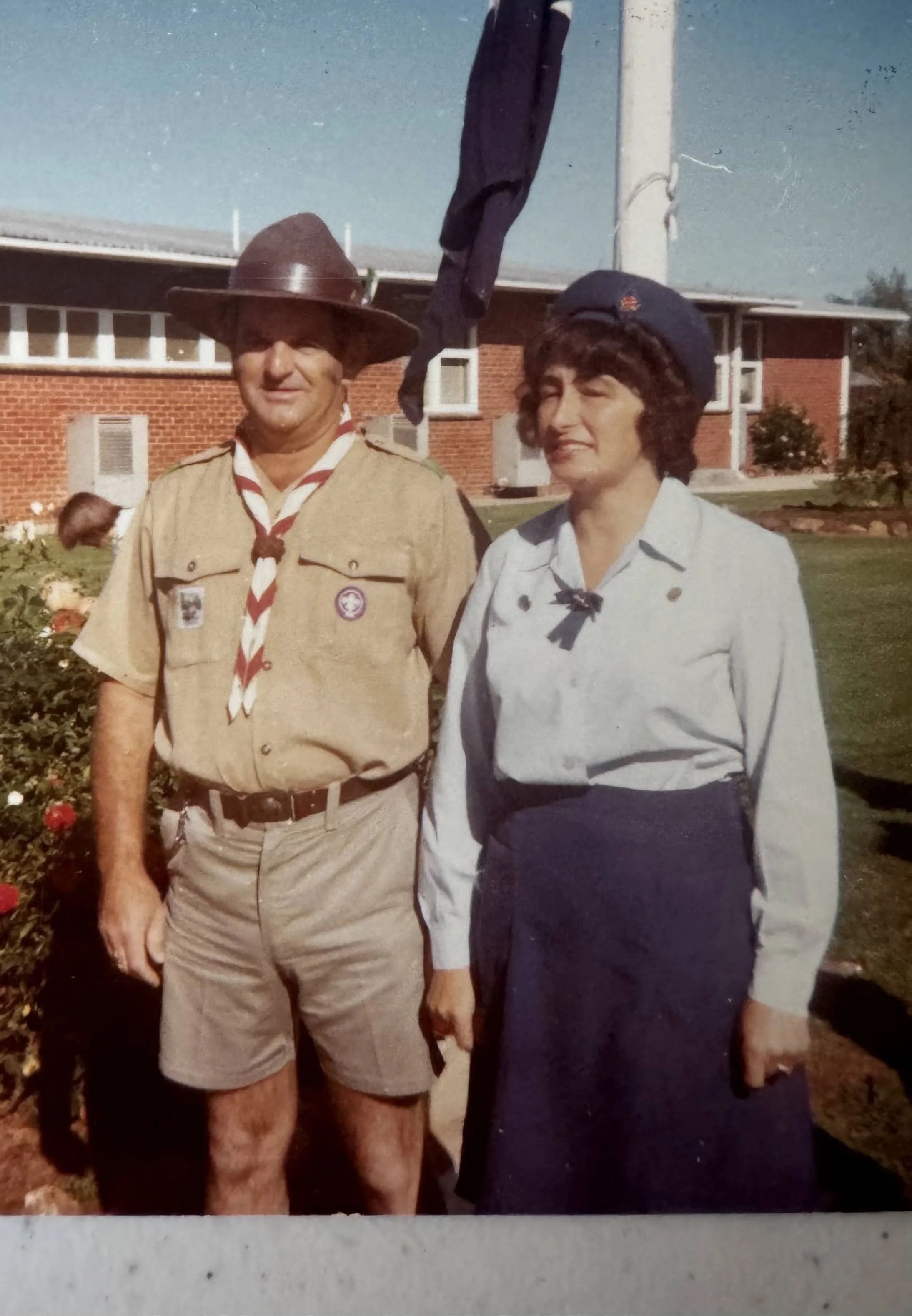
Max and Lorraine c. 1980sAn Accidental Entrepreneur
A much-loved family story from 1964 captures Lorraine’s fearless nature. With a newborn in one arm and a toddler on her hip, she mentioned to Max that she “rather liked” helping out at the local fish-and-chip shop. A week later, Max surprised her by purchasing the business outright, suddenly making Lorraine the full-time proprietor.
What followed was not hesitation, but action.
Lorraine built the business into a success while raising her family, laying the groundwork for what would become a lifetime of entrepreneurial and creative ventures. The fish-and-chip shop also became part of her community story. In keeping with the era, it was more than a place to buy a meal; it became an informal gathering point, a place where locals could talk, settle, and look out for one another. Lorraine was known to close the doors when needed so people could gather privately, regain their footing, or simply be given time and space without judgement. Even in business, her instinct was the same as it would be throughout her life: practical care, steady humour, and making room for people who needed it.
In the 1980s, Lorraine undertook formal studies in visual art and design, refining her natural artistic ability and deepening her understanding of art as both expression and connection. Later, as a mature-age student, she pursued university-level study in creative writing and literature, including through Open Universities Australia and Murdoch University. Her commitment to learning was lifelong, practical, and deeply personal.
Like many hardworking Australian families of the time, the Saltmarshes also faced adversity. When economic hardship forced the closure of Max’s construction company, Lorraine’s resilience became one of the family’s anchors. Through determination and optimism, she helped rebuild both business and home — another chapter in a life shaped by persistence and practical courage.
Championing the Arts in Regional Australia
Lorraine went on to open and operate a music store in Cobram, as well as art galleries in Cobram and Tocumwal. These were not simply businesses. They were gathering places — spaces where art, music, conversation, and community life could flourish in regional towns.
Through her galleries and arts work, Lorraine supported local and Australian artists, curated exhibitions, organised logistics, and helped bring creative experiences to communities that did not always have easy access to metropolitan cultural opportunities. She facilitated touring exhibitions for artists including Noel Westgate and Jan Barnett, supporting artists’ careers while giving regional audiences access to meaningful and original work.
Lorraine also volunteered with the Cobram Railway Art Gallery and served as the long-standing coordinator of the Tocumwal Annual Art Exhibition. She was involved with the Cobram and District Artists Society, including secretarial and contact roles, helping promote local art activity, workshops, exhibitions, and opportunities for artists to gather, learn, and share their work.
Her commitment to creative education extended through Cobram Community House, where she tutored creative writing. Through this work she encouraged others to find their voice, develop confidence, and see their own stories as worth telling.
Alongside this, Lorraine wrote extensively. She published poems and short stories, wrote artist biographies, and contributed to the Central Murray Informer, where she shared stories of local life, creativity, and community. Her writing reflected the same qualities as her painting and volunteering: observation, generosity, humour, and a deep respect for ordinary people and the places they call home.
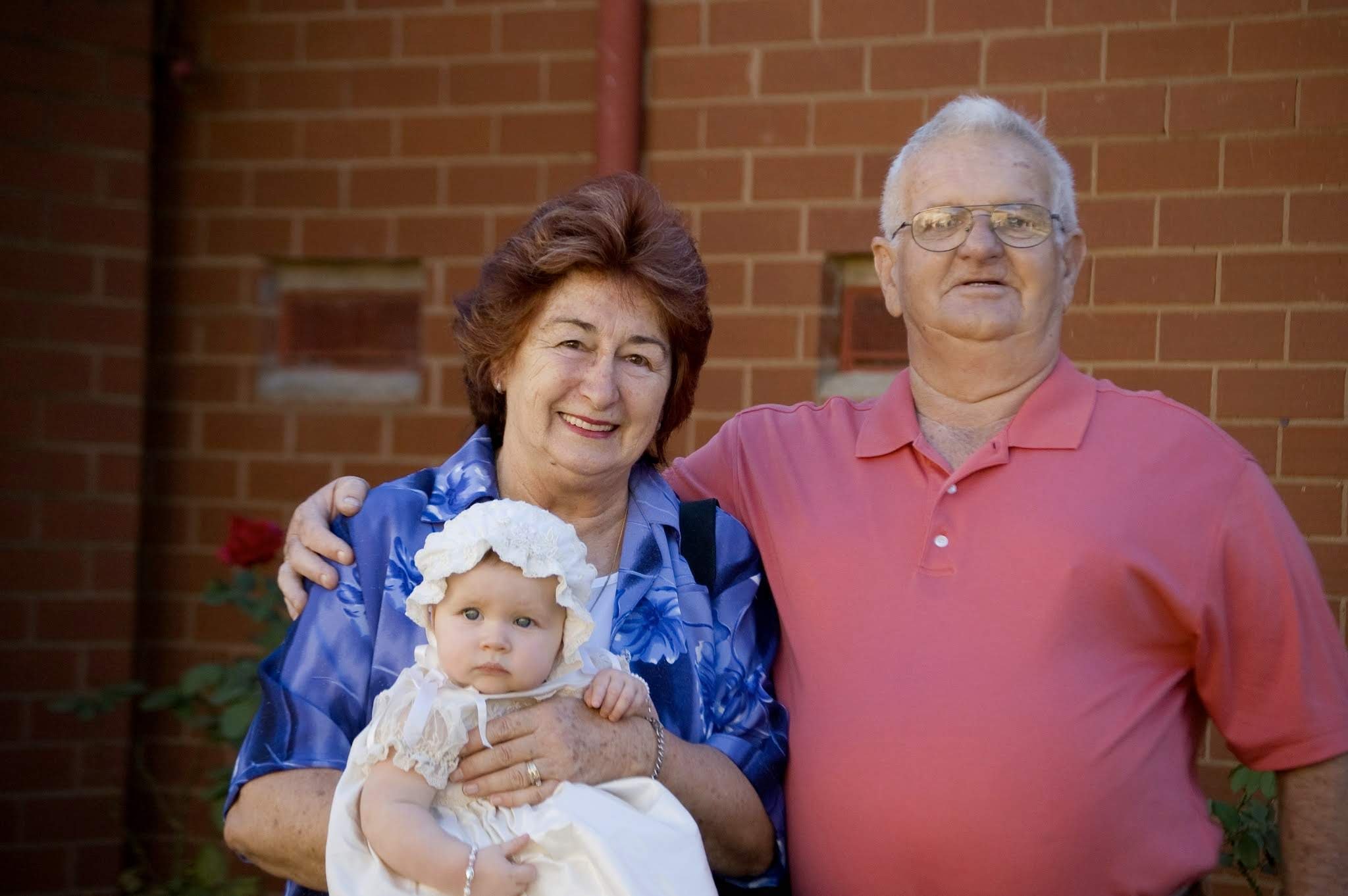
Lorraine, Max and (great-granddaughter)
Matilda c. 2010s
The Cobram Show and Children’s Creativity
One of Lorraine’s most significant community contributions was through the Cobram Agricultural Society and the Cobram Show.
Her association with the Society began in the 1960s, when the Show was still a smaller event and Lorraine volunteered wherever help was needed. Over the years she held many positions and performed many duties before taking on leadership of the Arts and Crafts Pavilion around 1992.
As Chief Steward of the Arts and Crafts Pavilion, Lorraine brought new ideas, new systems, and renewed energy. She expanded sections, recruited sponsors, enlisted stewards, involved schools, and created opportunities for children and young people to display their work publicly. She encouraged young helpers, welcomed new ideas, and created sections where needed so that more people could participate.
Over time, the Art Pavilion became an integral part of art education across Cobram, Barooga and surrounding district schools. Children from kindergarten and prep through to Year 12 entered works as classes, groups and individuals, making the annual Show a shared creative milestone for students, teachers and families. Under Lorraine’s leadership, the pavilion became more than an exhibition space; it became a place where young people could see their imagination valued publicly and where school-based creativity was connected to the wider community.
Barooga Primary, Cobram Secondary, Cobram Anglican Grammar, and, St Joseph’s schools formally thanked Lorraine in 2006 for many years of tireless support and effort in promoting children’s art and craft at the Cobram Agricultural Show. That recognition reflected more than an annual display. Through the pavilion, Lorraine helped affirm the importance of art in children’s wellbeing, confidence, cultural identity and sense of belonging, giving young people a public place where their imagination, skills and stories could be valued by the wider community.
That same year, Lorraine was awarded Life Membership of the Cobram Agricultural Society in recognition of many years of honorary service and her continuing dedication to increasing community involvement and support. The recognition reflected decades of service given not for status, but for the enjoyment, pride, and benefit of the people around her.
Community Safety and Neighbourhood Watch
Lorraine’s community service also extended strongly into community safety.
She became involved with Neighbourhood Watch in Cobram, initially as a zone leader and newsletter deliverer before becoming secretary for MRA 1 and 2. Her service continued for many years, including secretary and treasurer duties, publicity, fundraising, and event organisation.
Lorraine helped promote community safety through articles, photographs, publicity materials, displays, and local engagement. She helped others in Neighbourhood Watch gain confidence, with some going on to join other non-profit community organisations.
One of her major contributions was her involvement in organising the 2003 Police Expo at the Cobram Showgrounds. The event brought together Victoria Police, Neighbourhood Watch, emergency services, safety displays, markets, live entertainment, rides, demonstrations, food, competitions, and family activities. It celebrated 150 years of Victoria Police, 20 years of Neighbourhood Watch, and 15 years of Cobram Neighbourhood Watch, while raising funds and strengthening community connection.
Her work with Neighbourhood Watch was later recognised through a district award nomination for service to the program.
Service Through Practical Support
Lorraine’s generosity was never limited to the arts.
Through Two States Driving School, she provided countless hours of free driving instruction to people who needed practical help toward independence. This included young people, survivors of domestic violence, refugees, and others rebuilding their confidence and access to opportunity. For many, these lessons were more than a pathway to a licence. They were a pathway to employment, education, safety, confidence, and connection.
The same spirit carried into family life. Lorraine taught each of her grandsons to drive, attended their sporting events, and nurtured their curiosity and creativity through everyday moments — bushwalks, music, storytelling, painting, conversation, and famously inventive spelling games. These small acts reflected a larger philosophy: that confidence, imagination, and learning are built through encouragement and care.
In later years, Lorraine’s service continued through Meals on Wheels and aged care volunteering. She gave her time at Ottrey Homes and Karinya House, supporting older people through practical care, conversation, companionship and creative wellbeing programs. Among these were storytelling activities that invited residents to share and preserve memories from their lives — stories of triumph, hardship, love, loss and resilience. These programs helped build connection among residents while giving each person the dignity of being listened to, remembered and seen.
She also contributed to the Tocumwal Foreshore Committee and remained involved with Cobram Barooga Neighbourhood Watch, continuing her commitment to safe, connected, and welcoming communities.
Recognition and Enduring Influence
Lorraine’s contribution has been formally recognised in several ways.
She received the Cobram and District Citizen Award in 2005, acknowledging her voluntary and valuable contribution to the community. She also received a community service acknowledgement from Berrigan Shire and a Victorian International Year of Volunteers Certificate of Appreciation in 2001 for voluntary service to the community.
Her Life Memberships of the Cobram Amateur Cycling Club and Cobram Agricultural Society reflect two different but connected parts of her life: sport, service, community participation, and the belief that local organisations matter because they bring people together.
She also received certificates and acknowledgements from local and community organisations including Schools, Berrigan Lions Club, Cobram Brass Band, Australian Red Cross, and others — small markers of a much larger pattern of involvement.
Yet Lorraine’s impact is not measured only in certificates or titles. It is seen in the people she encouraged, the children whose artwork she helped place before a community, the artists she supported, the vulnerable people she helped gain independence, the older residents she visited, and the volunteers she worked beside.
Her children, Brian and Diane, and her grandchildren have carried forward many of her values through community organisations, charities, local businesses, creative work, and public service. Her influence was not something she often spoke about. It was something she lived, and others absorbed.
A Living Legacy
In retirement, Lorraine cherished life with her beloved husband Max, with whom she shared 53 years of marriage. Since his passing in 2013, she has remained a vibrant presence in family and community life — continuing to volunteer, create, encourage, and connect.
In 2025, The Lorraine Foundation was established in her honour, reflecting her lifelong belief in creativity, education, and care for others. She was awarded Honorary Lifetime Membership, recognising not only what she has done, but what she continues to inspire.
Lorraine remains actively involved with The Lorraine Foundation, whose mission reflects the values she has lived for decades: that every child deserves the chance to imagine, create, learn, and grow, regardless of circumstance.
Today, Lorraine resides in Ballarat, Victoria, surrounded by the layered history of another Australian gold-mining town. She continues to paint from her home studio, share her work with family and friends, follow the region’s cultural life, and contribute to the Foundation that carries her name.
Her days are marked by conversation, creativity, and quiet acts of kindness — a continuation of the spirit that has guided her since childhood: practical care, imagination, resilience, and a deep belief in helping people feel seen, capable, and connected.