Lorraine Saltmarsh
Collection
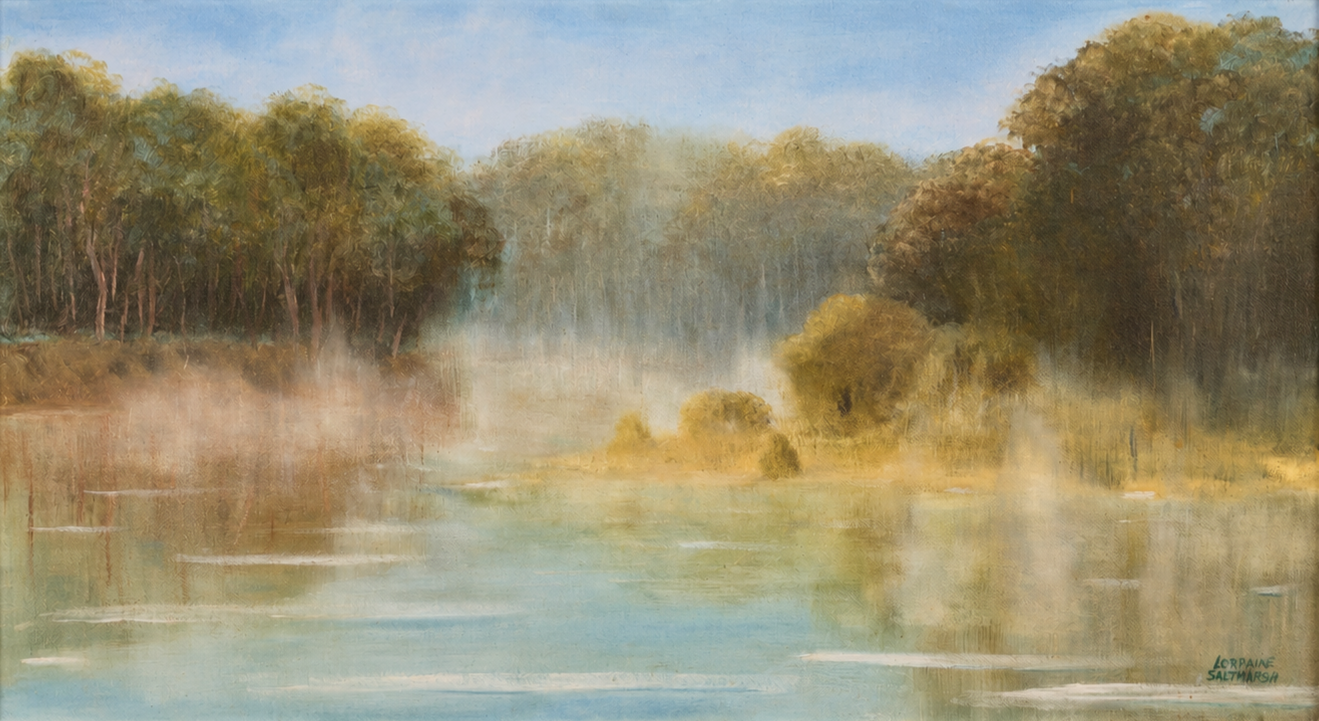
Morning Mist On The Murray
c. 1990 | Oil on board
A beautifully atmospheric depiction of the Murray River at first light, with delicate veils of mist drifting above still water and soft reflections beneath mature river red gums. The restrained palette of blue-greys, greens and warm ochres creates a tranquil mood while demonstrating Lorraine Saltmarsh's confident handling of light and atmosphere.
The broad panoramic composition and subtle layering of mist make this one of her most accomplished river landscapes, conveying both the quiet beauty and distinctive character of the Murray at dawn.
-
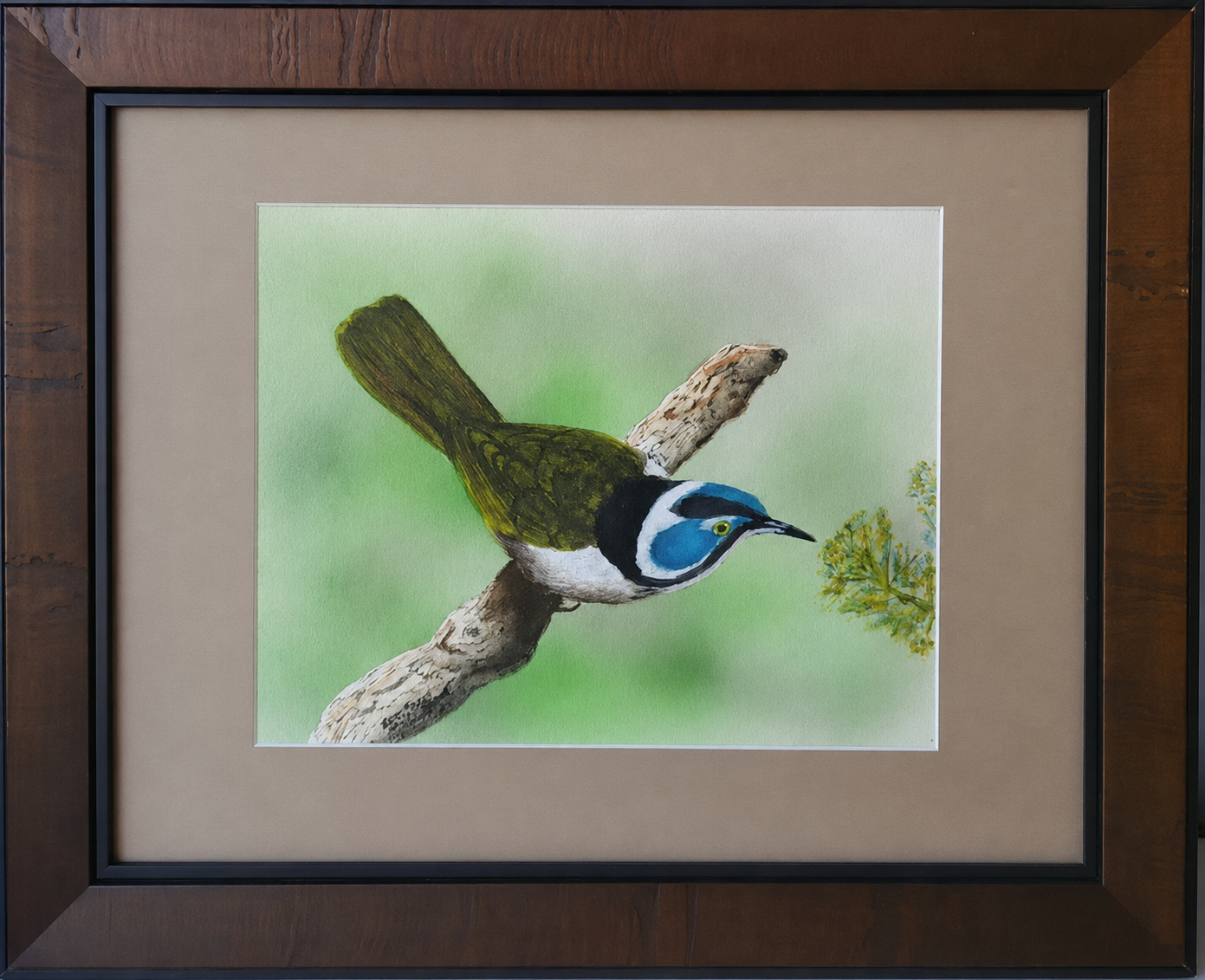
New List Blue-Faced Honey Eater
c. 1980s | Watercolour
A finely observed study of a Blue-faced Honeyeater (Entomyzon cyanotis) perched on a eucalypt branch, rendered in transparent watercolour with meticulous attention to plumage, colour and form.
The softly graduated green background isolates the bird, drawing attention to its vivid blue facial markings and olive-green upper plumage.
Unlike Lorraine Saltmarsh's broader landscape works, this painting demonstrates her ability as a wildlife artist, combining scientific observation with a restrained, elegant composition.
-
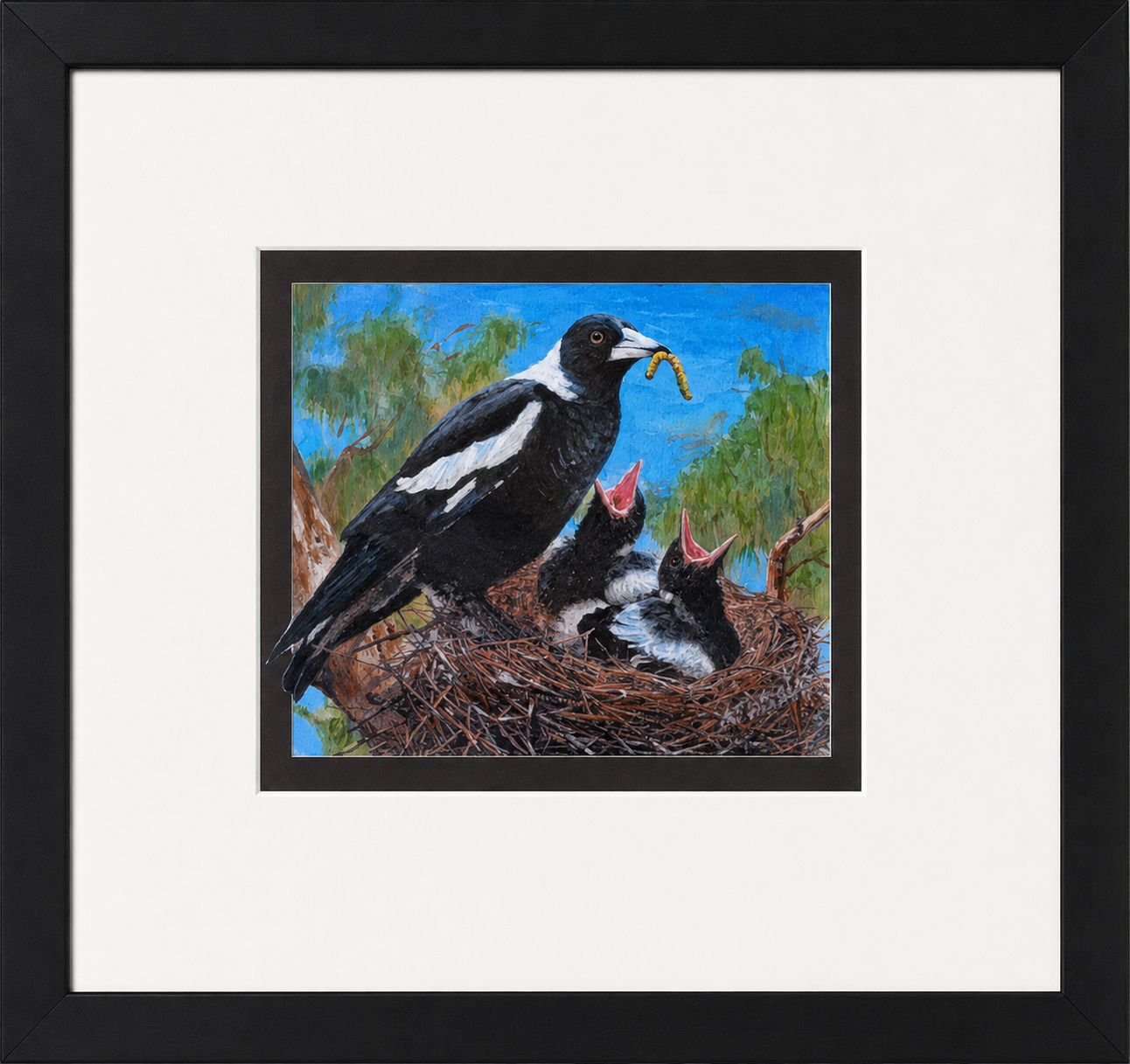
Magpies On The Foreshore
c. 2000s | Watercolour
A finely observed study of a Blue-faced Honeyeater (Entomyzon cyanotis) perched on a eucalypt branch, rendered in transparent watercolour with meticulous attention to plumage, colour and form.
The softly graduated green background isolates the bird, drawing attention to its vivid blue facial markings and olive-green upper plumage.
Unlike Lorraine Saltmarsh's broader landscape works, this painting demonstrates her ability as a wildlife artist, combining scientific observation with a restrained, elegant composition.
-
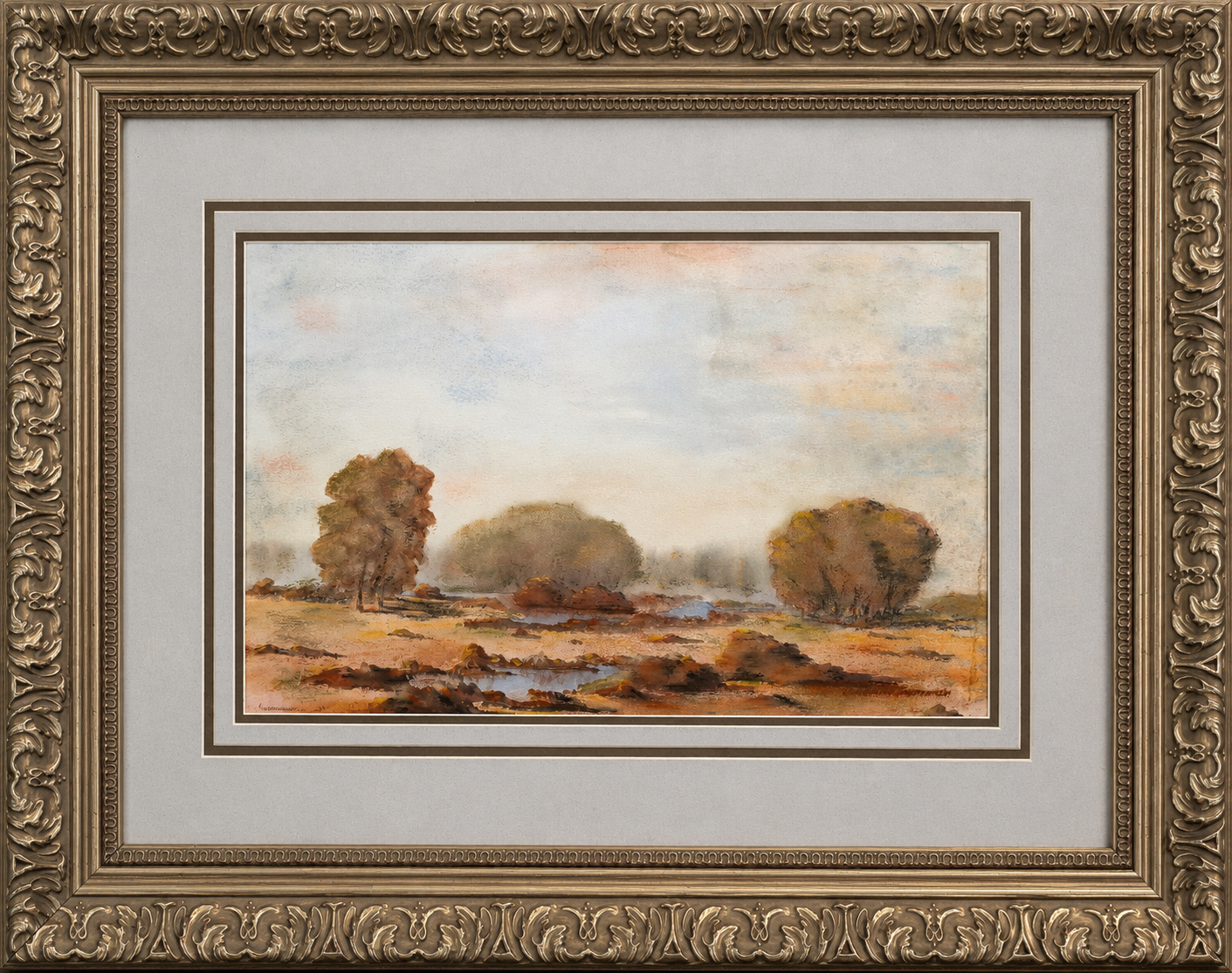
Water Holes
c. 2000s | Watercolour
A tranquil study of the Murray River wetlands, Seeping Waters captures the quiet beauty of shallow seasonal pools scattered across the floodplain.
Painted in Lorraine Saltmarsh's restrained watercolour style, the work relies on delicate washes and muted earth tones to evoke stillness rather than drama.
Soft-edged trees emerge through a gentle atmospheric haze while reflections gather in the scattered pools, creating a sense of calm and open space characteristic of northern Victorian wetlands.
Unlike many of Saltmarsh's more detailed landscape paintings, this work embraces suggestion over precision, allowing light and atmosphere to become the primary subjects.
The subtle palette and restrained composition reflect the artist's appreciation for Australia's understated rural beauty, where the landscape rewards quiet observation.
-
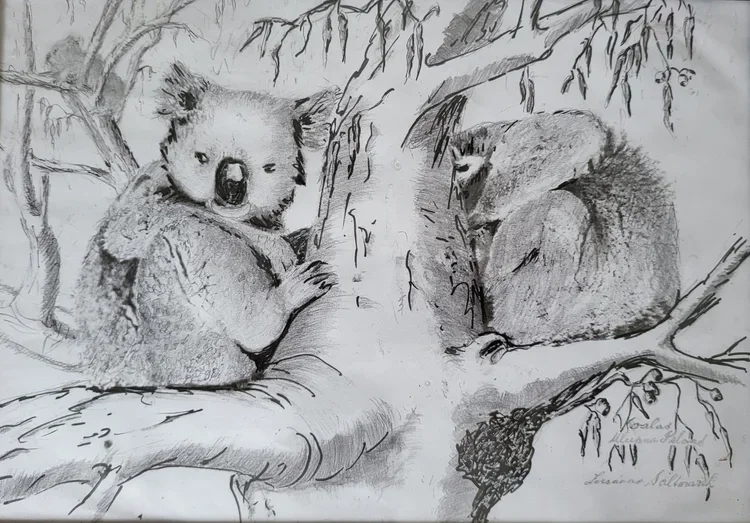
Koala's - Ulupna Island
c. 2000s | Pen & Pencil
A finely executed pen and graphite drawing depicting two koalas resting among the branches of a eucalyptus tree on Ulupna Island, located on the Murray River near Cobram, Victoria.
One koala gazes directly toward the viewer while the second sleeps peacefully in the background, creating a gentle narrative of alertness and repose.
Delicate pencil modelling is combined with crisp pen linework to define the texture of fur, bark and foliage, producing a work of quiet realism and intimate observation.
-
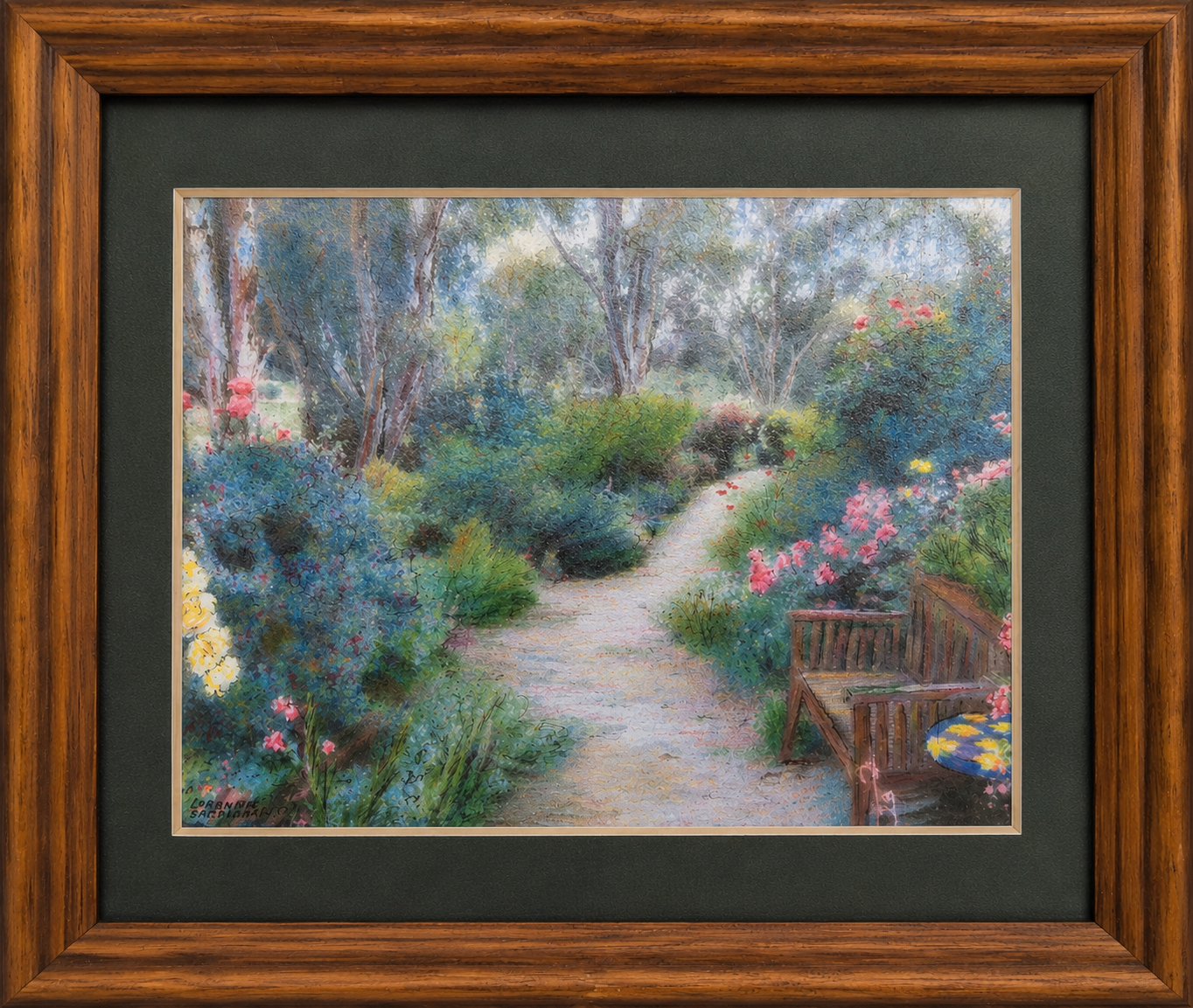
Garden Retreat
c. 1990s | Mixed media
A tranquil Australian garden scene depicting a winding path leading through densely planted shrubs and flowering borders beneath mature eucalyptus trees.
A timber garden seat and small table occupy the foreground, inviting the viewer into the composition.
The restrained palette of greens, blues and soft pinks creates a peaceful atmosphere, while the curving pathway provides depth and a gentle sense of discovery.
-
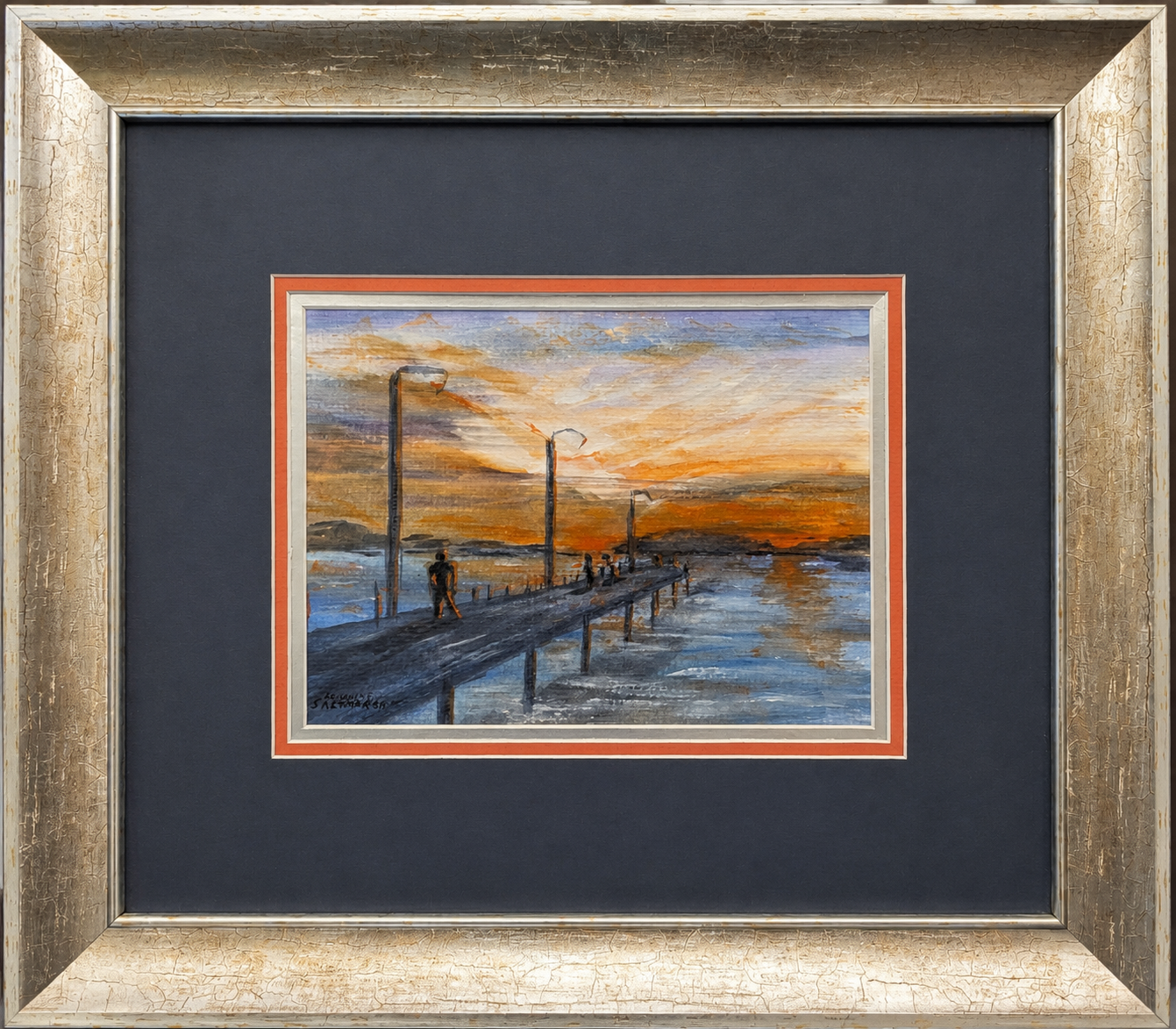
Evening Promenade
c. 2000s | Watercolour
A long timber pier stretches toward the horizon beneath a glowing sunset, where the last warm light of day reflects across calm water. T
all lamp posts punctuate the boardwalk, leading the eye toward a small gathering of evening strollers silhouetted against the brilliant orange sky.
The foreground figure establishes a quiet, contemplative mood, while cool blues and greys in the water balance the fiery sky.
-
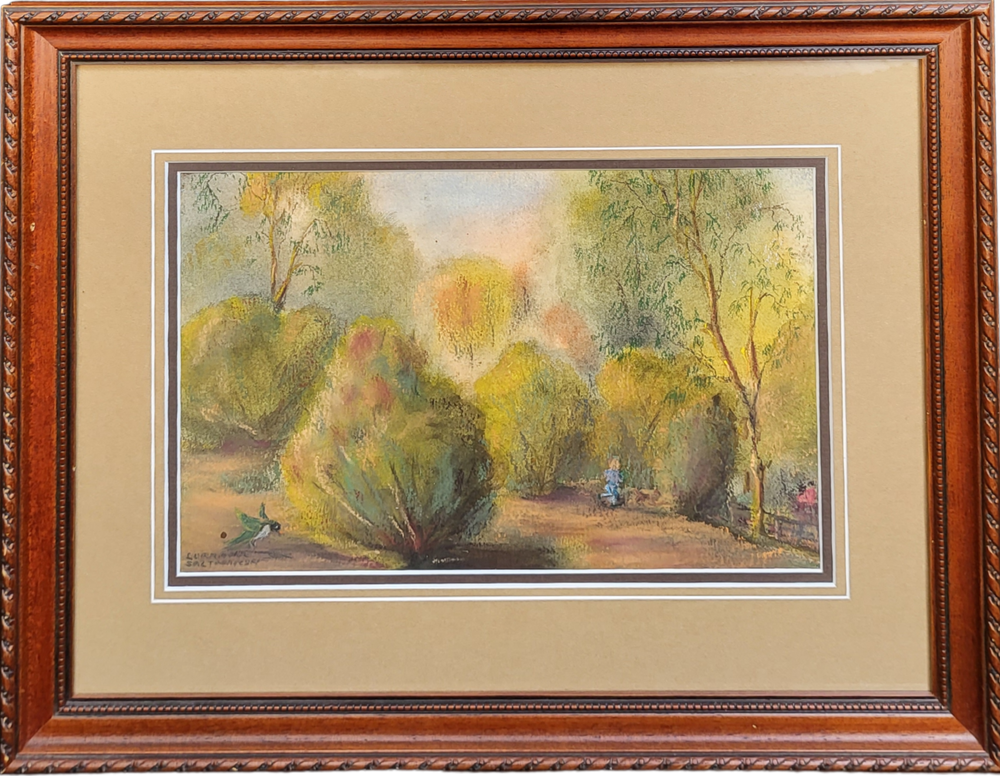
Pathways
c. 1990s | Pastel on paper
A peaceful garden scene rendered in soft pastel, depicting winding pathways bordered by mature shrubs and slender trees illuminated by warm afternoon light.
Rather than focusing on botanical precision, Lorraine Saltmarsh uses gentle layers of colour and softened edges to evoke the atmosphere of a well-loved garden in late summer.
Small touches of blue and red among the foliage provide subtle points of interest, while the composition invites the viewer into the landscape through its meandering path and dappled light.
-
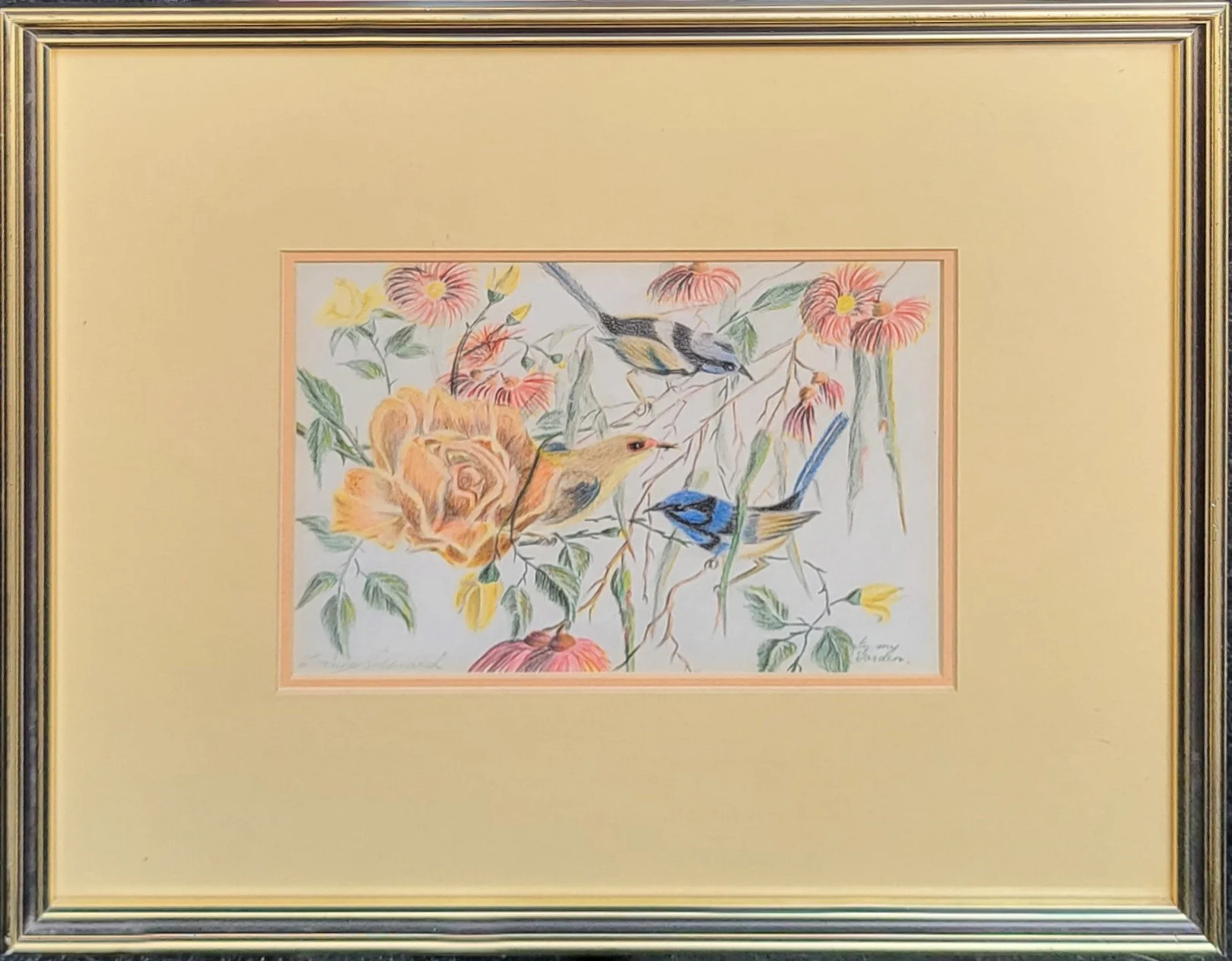
In My Garden
c 1980s | Coloured pencil
A finely observed botanical and bird study featuring three small native Australian birds among flowering garden plants, including roses and daisies.
Executed in coloured pencil with delicate layering and subtle tonal transitions, the composition reflects Lorraine Saltmarsh's close appreciation of Australian garden life.
The carefully balanced arrangement combines botanical illustration with wildlife art, creating a gentle and intimate scene that showcases her precise draughtsmanship and restrained use of colour.
-
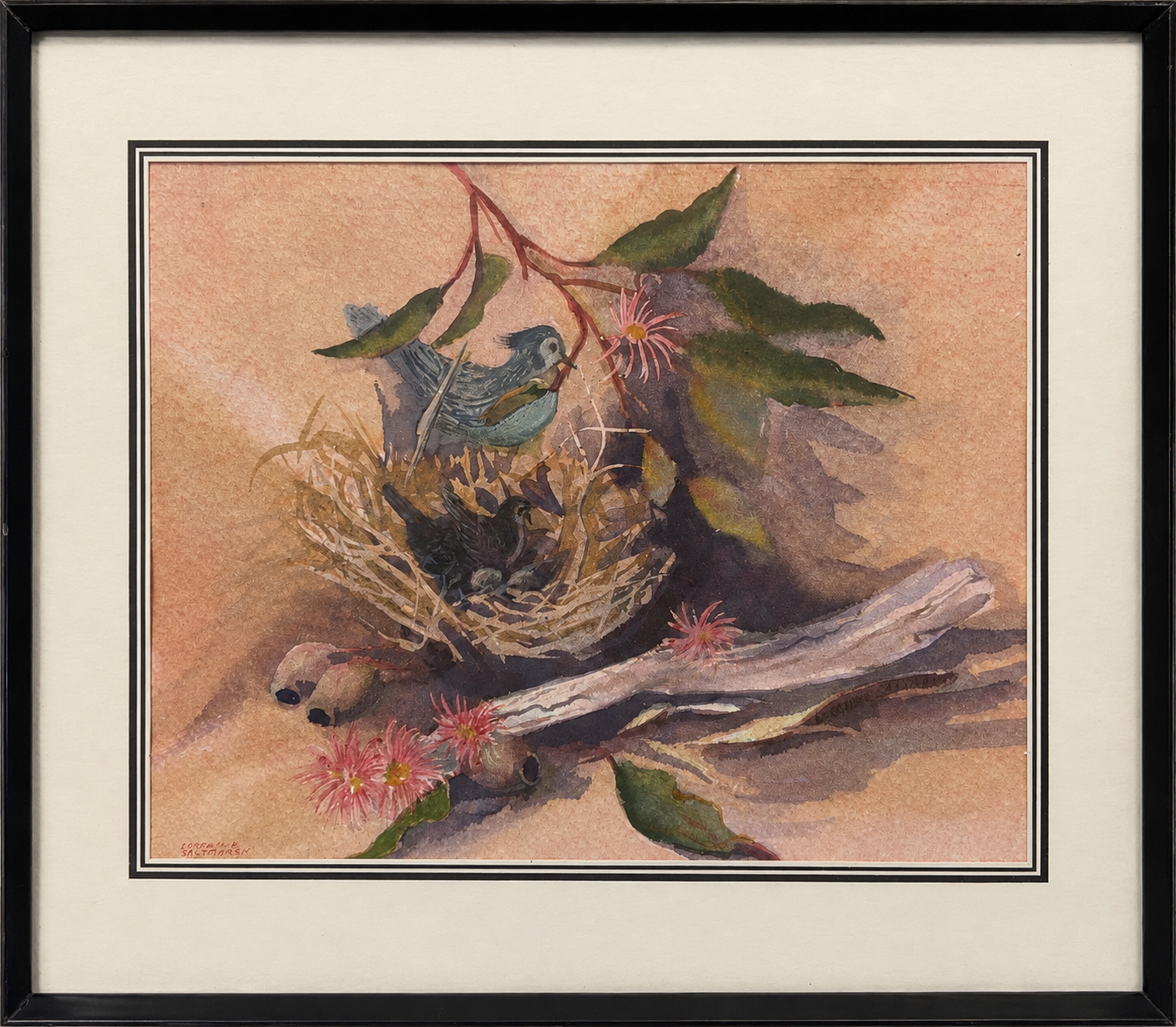
Motherhood
c. 1990s | Watercolour
A charming still-life watercolour depicting a small native Australian songbird tending its nest among flowering eucalyptus branches and driftwood.
Executed in soft earth tones with delicate pink gum blossoms, the composition celebrates the quiet intimacy of nesting season.
The restrained palette, gentle washes and careful botanical observation are characteristic of Lorraine Saltmarsh's wildlife studies from her mature period.
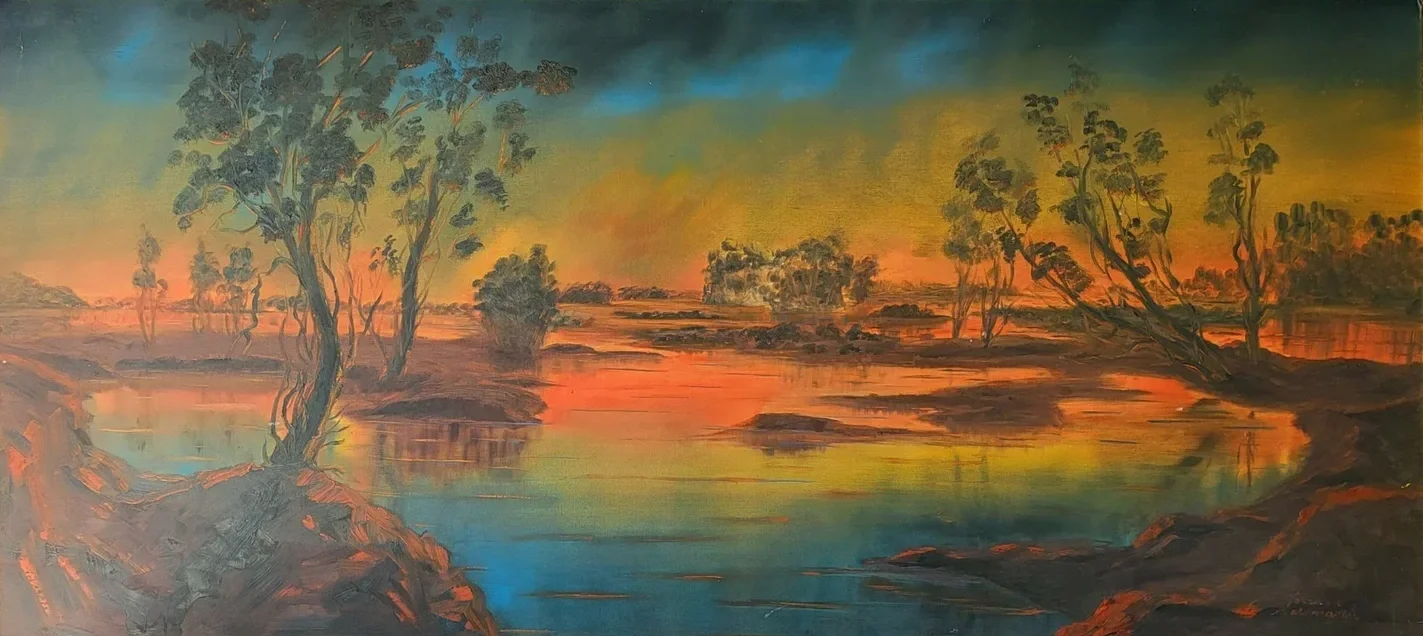
Embers Over Water
c.1970s | Oil on board
A striking panoramic landscape capturing the final glow of sunset across a broad Australian wetland.
Rich amber, crimson and gold reflections illuminate the still water beneath a dramatic turquoise and deep blue sky, creating a vivid contrast between the warmth of the fading light and the coolness of approaching evening. Clusters of river red gums stand silhouetted against the horizon, while bold foreground brushwork leads the eye into the expansive waterway beyond.
Painted with expressive confidence, Embers Over Water departs from Lorraine Saltmarsh's more restrained naturalistic palette in favour of heightened colour and atmosphere. Rather than documenting a specific location, the work evokes the emotional experience of an Australian sunset, celebrating the interplay of light, reflection and landscape. Its panoramic format enhances the sense of openness and tranquillity, making it one of the more visually dramatic works within the collection.
-
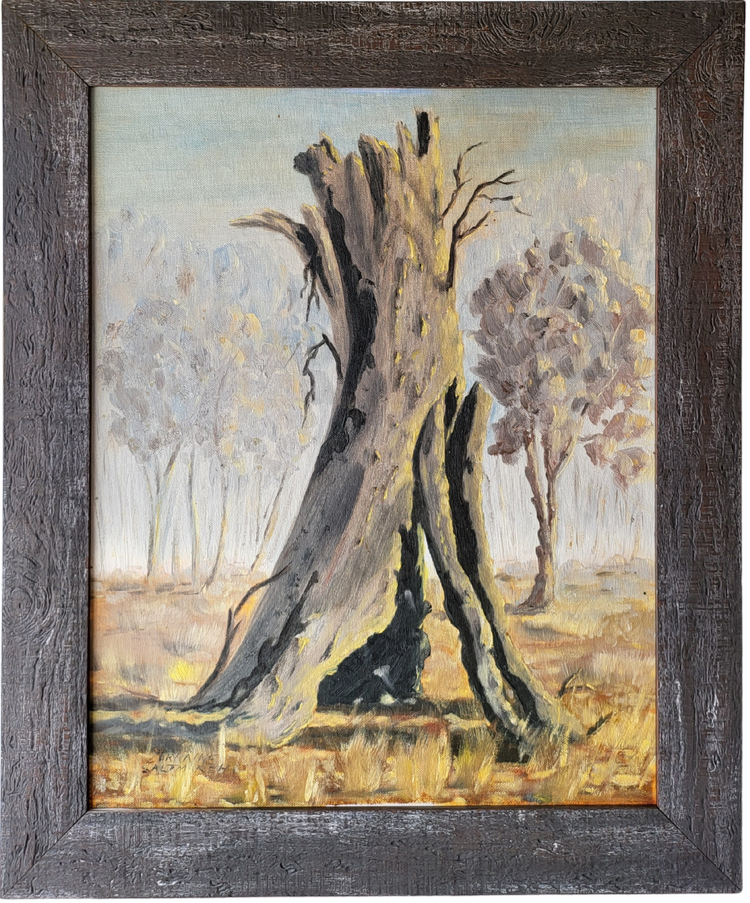
The Last Stand
c.1970s | Oil on board
Dominating the composition is the weathered trunk of an ancient River Red Gum, its hollowed form standing as a quiet monument to the endurance of the Australian landscape.
Rendered in muted greys, warm ochres and soft golds, Lorraine Saltmarsh uses confident brushwork and subtle tonal variation to emphasise the sculptural character of the tree, while a lightly painted stand of eucalypts recedes into the atmospheric background.
The restrained palette and careful handling of light evoke the stillness of a dry bush morning, allowing the monumental trunk to become both the focal point and the emotional centre of the work.
Rather than depicting a dramatic landscape, The Last Stand celebrates the resilience, dignity and timeless presence of one of Australia's most iconic native trees..
-
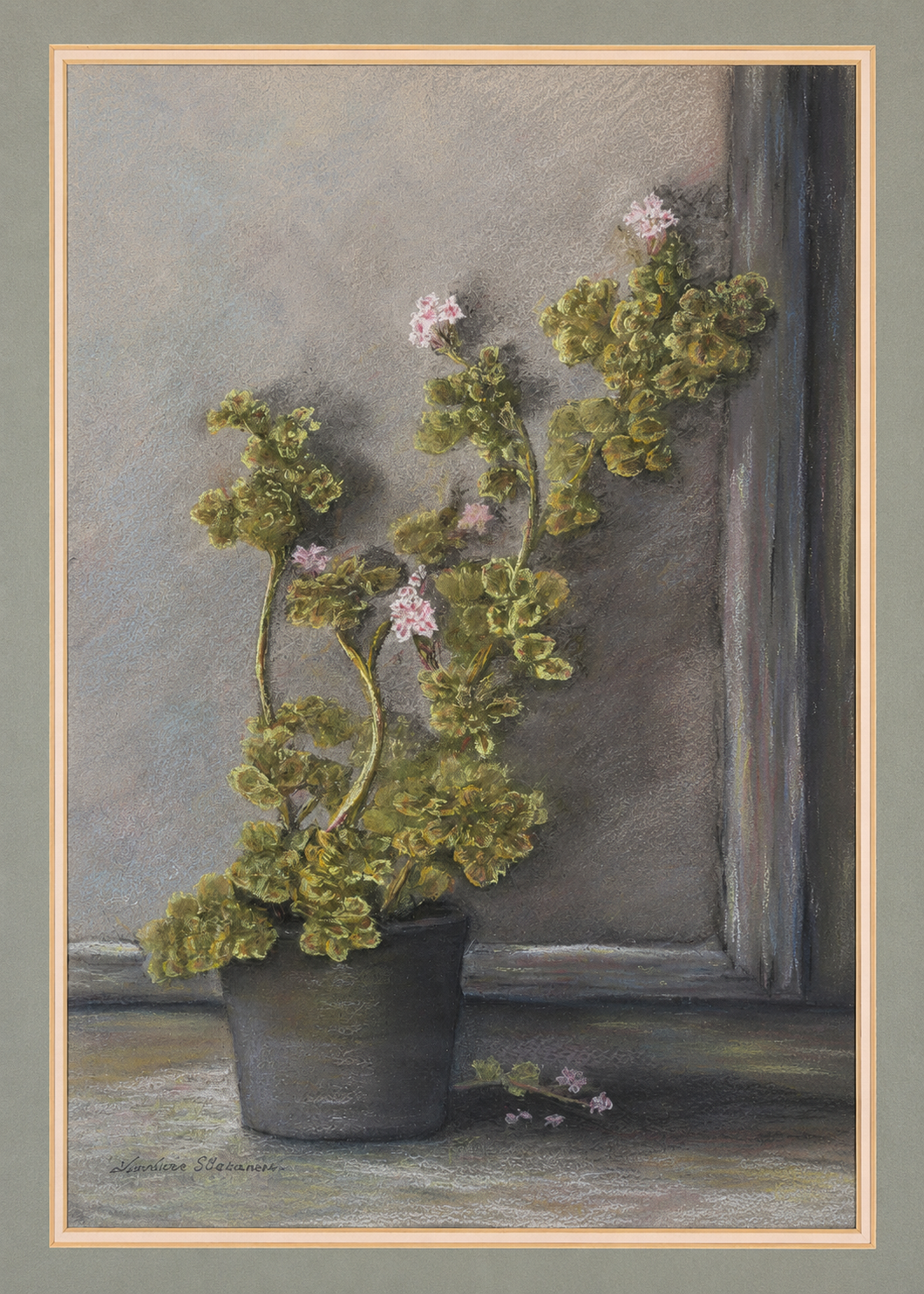
Mother's Geranium
c. 1970s | Pastel on paper
A quiet still life depicting a flowering geranium in a simple black pot resting on a windowsill or bench.
Executed in soft pastel with restrained grey-blue tones, the work demonstrates Lorraine Saltmarsh's sensitivity to light, texture and everyday domestic subjects.
The muted background allows the variegated foliage and delicate pink blossoms to become the natural focal point, creating an intimate and contemplative composition.
-
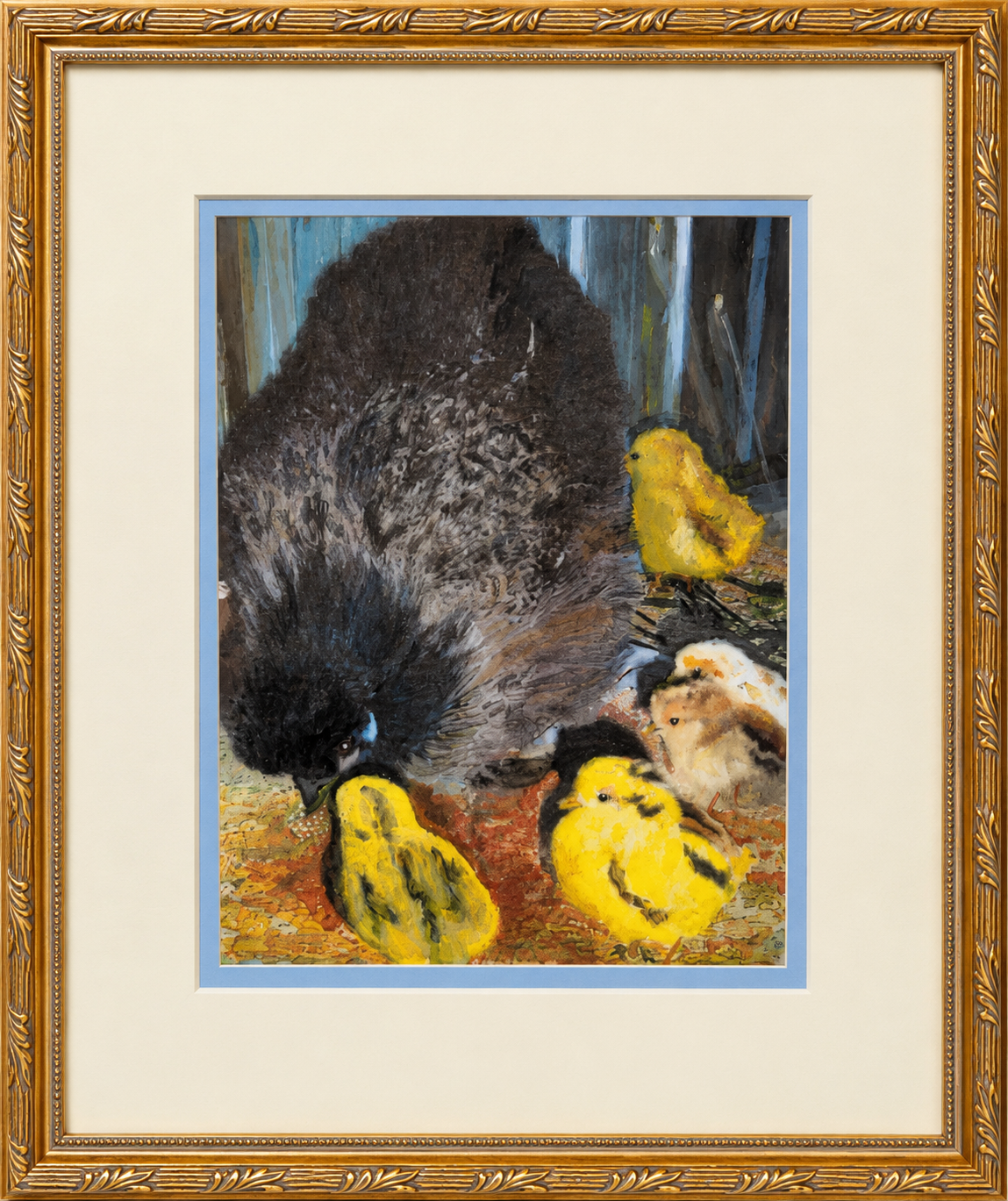
Chooken And Chickens
c. 2000s | Pastel on paper
A charming study of a Silkie hen tending a small brood of newly hatched chicks.
The composition focuses on the protective relationship between mother and young, with the soft grey plumage of the hen contrasting beautifully against the vivid yellow chicks and the warm earthy tones of the farmyard floor.
Lorraine Saltmarsh uses rich colour and expressive pastel strokes to capture both the texture of feathers and the gentle movement of the birds.
-
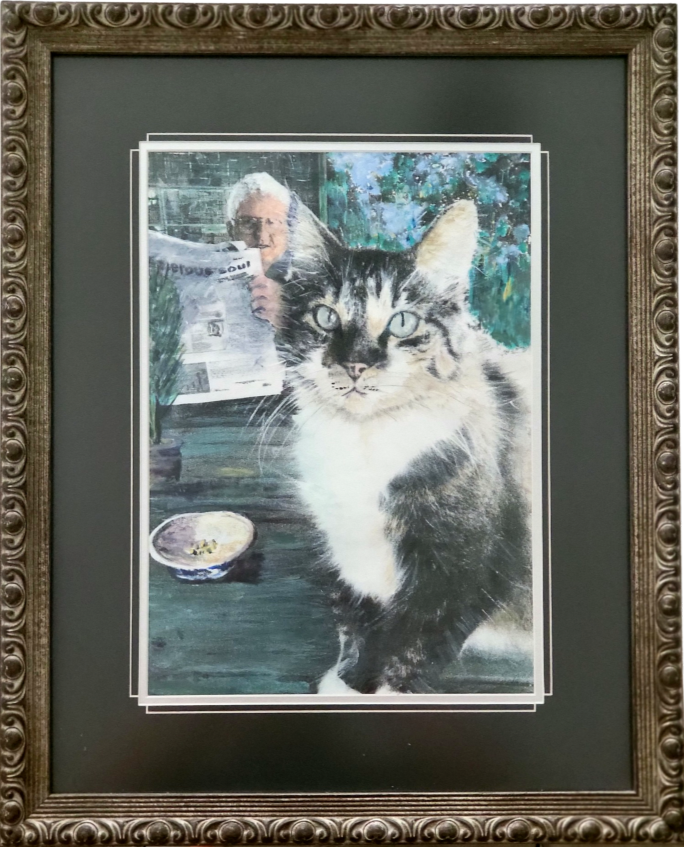
Generous Soul
c. 2010s | Pencil and Watercolour
Painted in 2011, Generous Soul is an intimate portrait of Lorraine Saltmarsh's husband, Max, enjoying a quiet summer afternoon in the couple's backyard.
Originally drawn in pencil and finished with delicate watercolour washes, the work combines portraiture with a study of the family's beloved tabby cat, whose commanding presence gently steals the foreground while Max sits contentedly reading the newspaper behind.
The composition captures an authentic domestic moment rather than a formal portrait. Saltmarsh's sensitive pencil work and restrained use of watercolour create a gentle atmosphere of warmth, companionship and everyday contentment.
The affectionate balance between man and animal reflects the unspoken rhythms of home life, with the cat assuming its rightful place as the centre of attention.
Created only two years before Max's passing, Generous Soul has become an especially poignant work within the artist's oeuvre. It preserves not simply his likeness, but an ordinary moment of peace that would later carry profound emotional significance, making the painting both a family remembrance and a celebration of life's quiet joys.
-
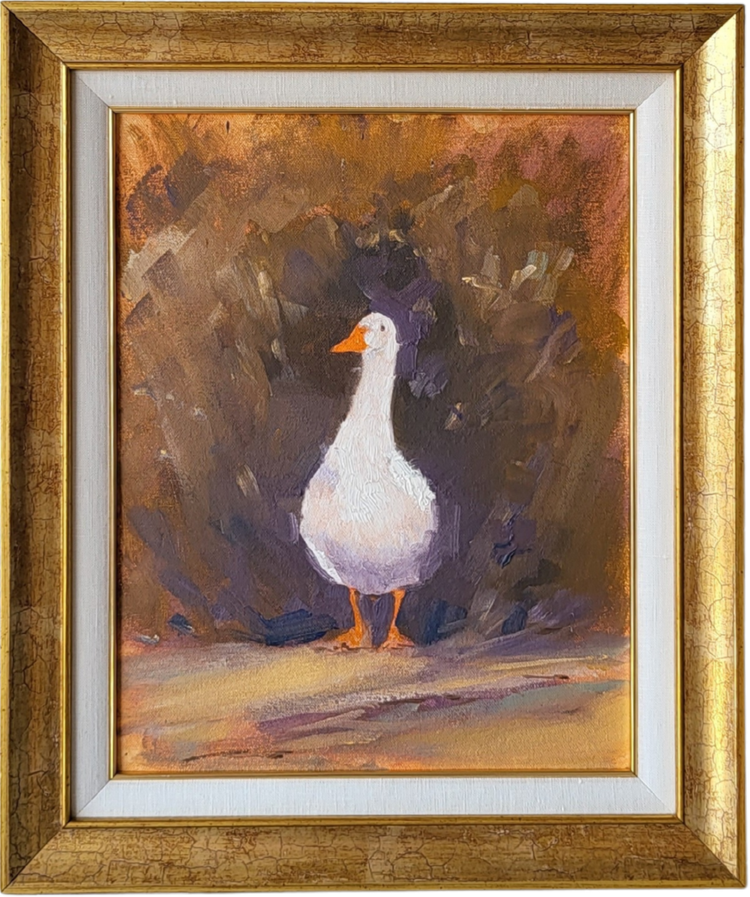
Young Ned, Something To Say
c. 2000s | Acrylic on board
A delightful acrylic portrait of a white domestic goose standing confidently against a warm, loosely painted background.
Titled Young Ned, Something To Say, the work captures the inquisitive personality of its subject through an upright stance, direct gaze and vivid orange bill and feet.
Rather than pursuing photographic realism, Lorraine Saltmarsh employs confident, impressionistic brushwork and a restrained palette of earth tones that allows the bright white plumage to become the visual focus.
The painting exemplifies her ability to infuse familiar rural subjects with warmth, humour and individuality.
-
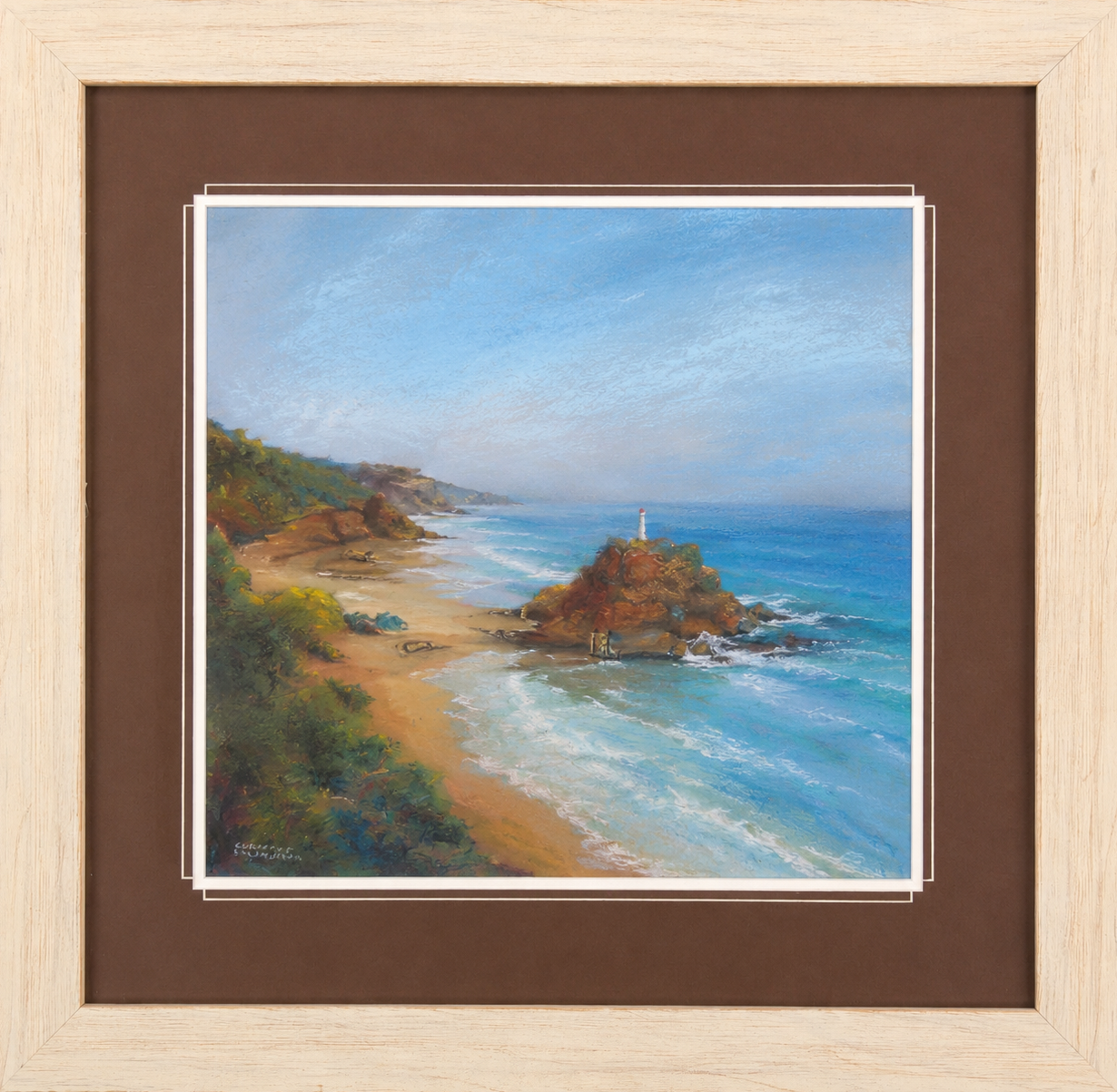
Airey's Inlet
c. 2000s | Watercolour on paper
A tranquil study of the Murray River wetlands, Seeping Waters captures the quiet beauty of shallow seasonal pools scattered across the floodplain.
Painted in Lorraine Saltmarsh's restrained watercolour style, the work relies on delicate washes and muted earth tones to evoke stillness rather than drama.
Soft-edged trees emerge through a gentle atmospheric haze while reflections gather in the scattered pools, creating a sense of calm and open space characteristic of northern Victorian wetlands.
Unlike many of Saltmarsh's more detailed landscape paintings, this work embraces suggestion over precision, allowing light and atmosphere to become the primary subjects.
The subtle palette and restrained composition reflect the artist's appreciation for Australia's understated rural beauty, where the landscape rewards quiet observation.
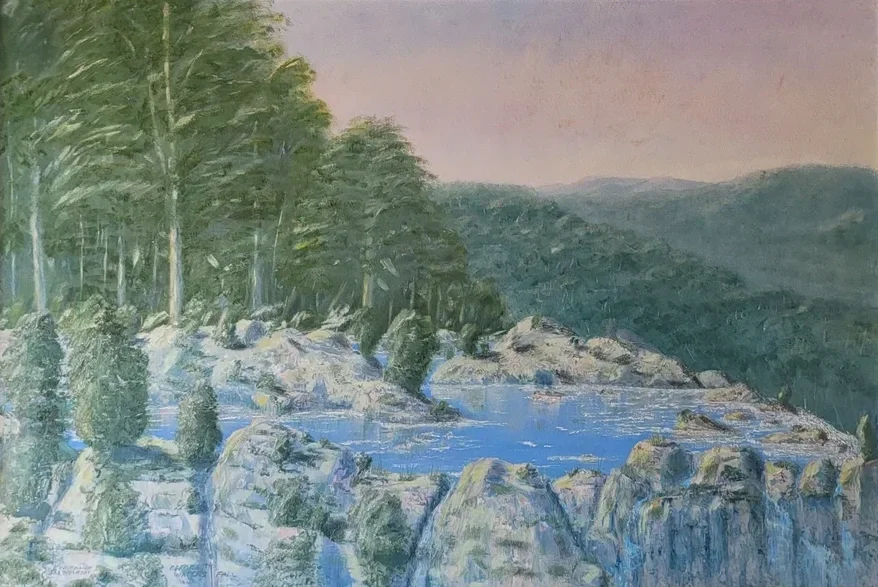
Before The Water Falls
c. 1980s | Oil on board
A substantial Australian mountain landscape depicting a tranquil alpine pool poised above a rocky escarpment immediately before the water descends into the valley below.
Towering eucalypts frame the left side of the composition, while distant forested ranges dissolve into soft atmospheric haze beneath a delicate evening sky.
Executed in Lorraine Saltmarsh's mature landscape style, the work combines careful observation with an impressionistic treatment of light, capturing the quiet stillness of the high country immediately before the movement of falling water.
Its scale and panoramic composition make it one of the artist's more ambitious landscape paintings.
Artist Insight & Critique
-
Lorraine Saltmarsh's work is distinguished by her ability to portray Australia as more than landscape. Her paintings capture the character of places through the people, histories, and quiet moments that give them meaning. Whether depicting a rural township, a riverbank, or an isolated stretch of bush, her work reflects a deep appreciation for belonging and community.
Rather than romanticising the landscape, Lorraine presents it honestly. Her paintings celebrate resilience, seasonal change, and the enduring relationship between people and the land they inhabit.
-
Landscape formed the foundation of Lorraine's artistic practice. Working across oils, watercolour, pastel, pencil, ink, and mixed media, she developed a style that balanced careful observation with emotional interpretation.
Many works were painted en plein air, allowing changing light and atmosphere to shape the final composition. Rather than recording scenery alone, her landscapes preserve moments in time - places remembered for their stories as much as their appearance.
-
Lorraine possessed an exceptional eye for the natural world. Her sketches of native birds, animals, and flora reveal patience, curiosity, and technical confidence.
Often completed as quick field studies, these works carry a documentary quality while retaining warmth and personality. Even the simplest pencil sketch conveys movement and character, reflecting an artist who understood that observation begins with genuine attention.
-
Many of Lorraine's most significant works reflect personal experiences throughout her life.
Humorous pieces celebrate imagination and everyday joy, while others explore grief, family, hope, and renewal. Works created following major life events demonstrate remarkable emotional honesty, allowing viewers to connect not only with the subject but with the artist herself.
This openness gives her collection an enduring humanity that extends beyond technical accomplishment.
-
Lorraine Saltmarsh should be remembered as an artist who bridged the personal and the communal.
Her work documents Australian life with generosity, humility, and authenticity. It preserves not only landscapes and wildlife but the spirit of the communities she loved, leaving behind a body of work that continues to inspire creativity, resilience, and connection.
-
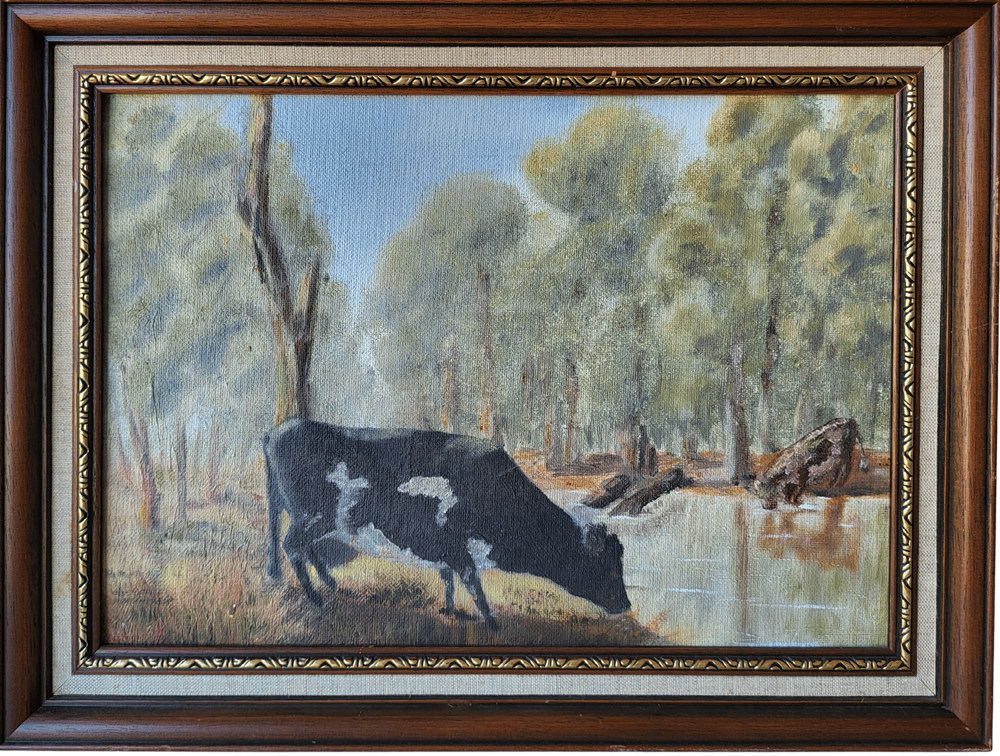
Sheepwash Creek
c.1960s | Oil on board
A peaceful rural landscape depicting a quiet creek bordered by mature eucalyptus trees beneath an expansive Australian sky.
Painted in Lorraine Saltmarsh's characteristic naturalistic style, the composition balances open water with softly rendered bushland, capturing the stillness and gentle light of the Australian countryside.
Warm earth tones contrast with cool reflections across the creek, while carefully observed gum trees frame the scene and draw the viewer into the landscape.
The restrained palette and confident brushwork reflect Saltmarsh's enduring appreciation for the beauty of regional Victoria.
-
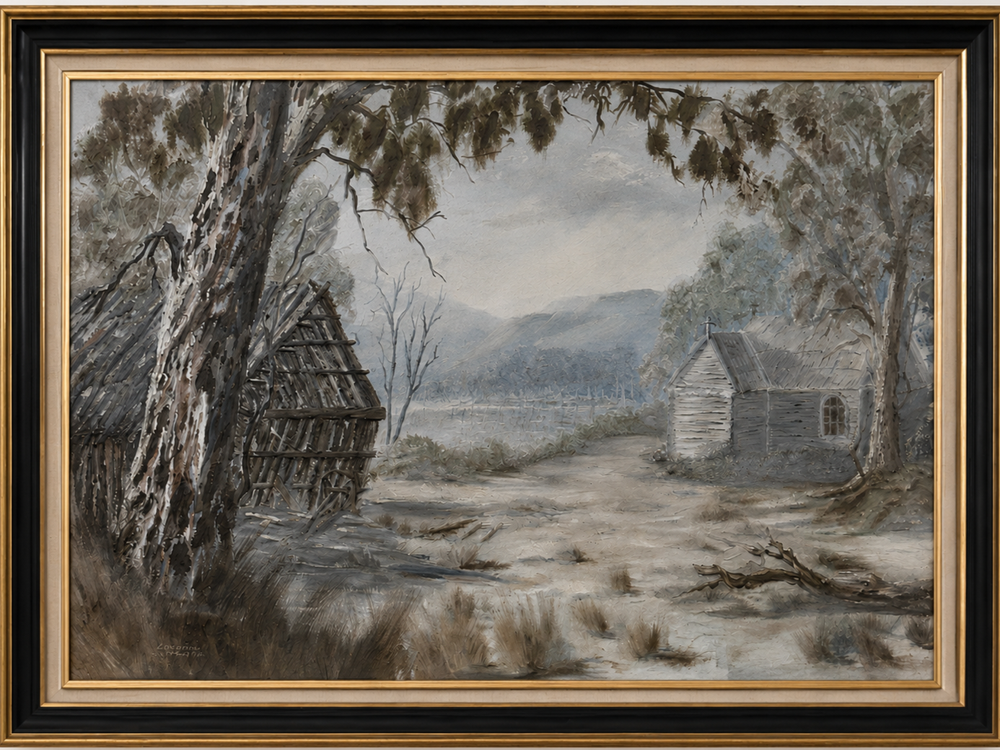
Mountain Homestead
c. 1960s | Oil on board
An evocative depiction of an isolated mountain homestead nestled beside a quiet watercourse beneath towering eucalyptus trees.
Weathered timber buildings and rustic fencing suggest the resilience of early rural settlement, while distant hills fade into soft atmospheric tones beyond the valley.
Painted in a restrained palette of greys, browns and muted greens, the work conveys both the solitude and enduring character of Australia's high country.
Saltmarsh's careful handling of light and texture creates a nostalgic interpretation of pioneer life, inviting the viewer into a landscape rich with history and memory.
-
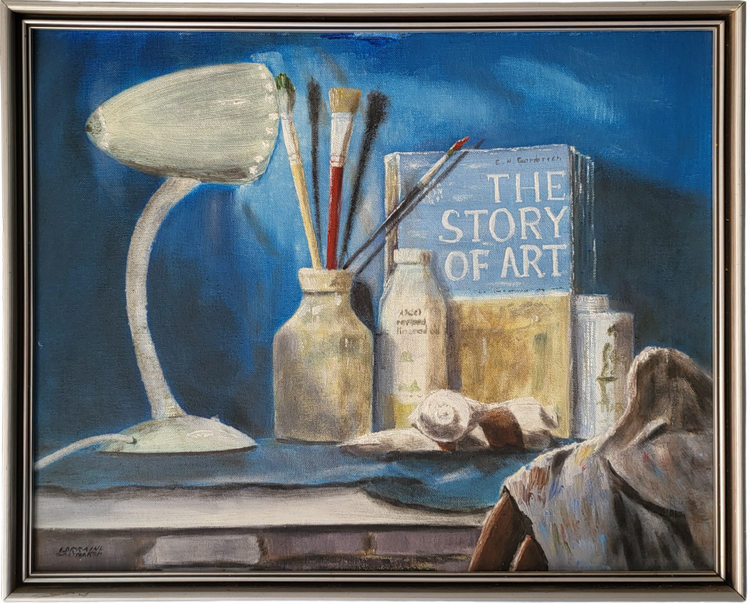
The Story Of Art
c. 1970s | Oil on board
A thoughtful studio still life depicting the tools of an artist's practice, including paintbrushes, paint tubes, jars, a desk lamp and a well-used copy of The Story of Art by E.H. Gombrich.
Painted in Lorraine Saltmarsh's restrained realist style, the composition offers a personal glimpse into the artist's working environment, celebrating the relationship between study, craft and artistic practice.
The strong cobalt blue backdrop provides a striking contrast to the muted studio objects, creating an intimate and highly individual work.
-
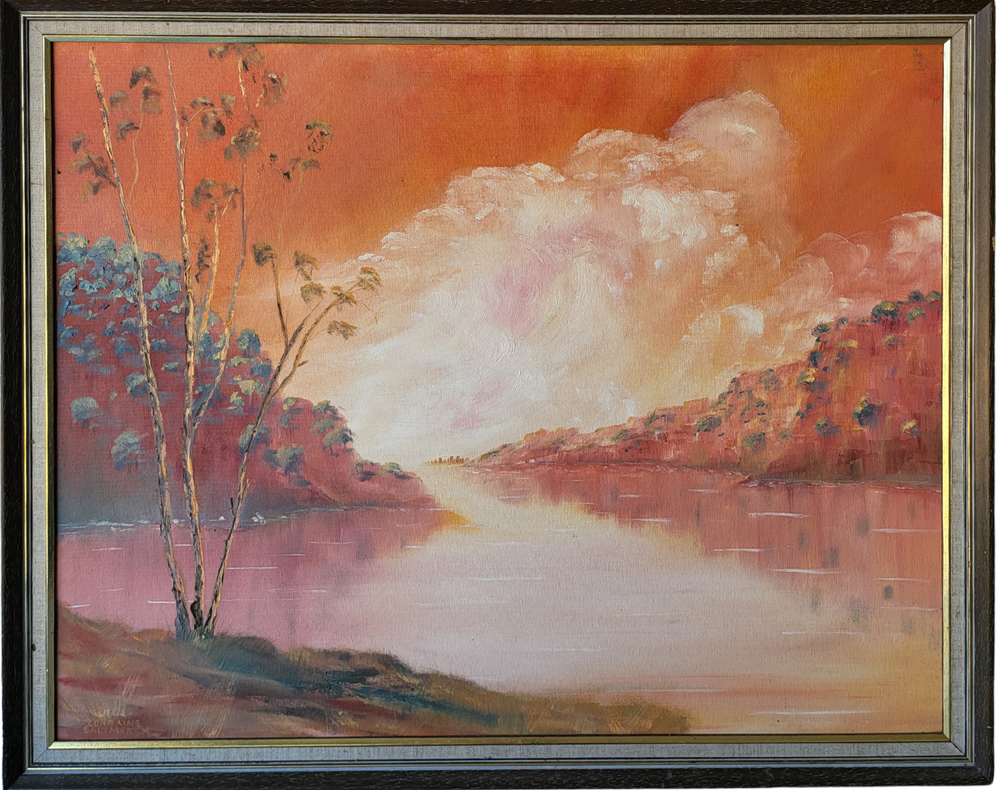
Radiant Sky
c. 1980s | Oil on board
A luminous Australian river landscape bathed in the warm glow of late afternoon or sunset light.
The composition is dominated by expansive cloud formations reflecting across tranquil water, while softly rendered riverbanks and slender eucalyptus trees frame the distant horizon.
Departing from Lorraine Saltmarsh's more naturalistic palette, Radiant Sky explores expressive colour, using rich oranges, pinks and mauves to evoke atmosphere and the fleeting brilliance of the Australian sky.
The result is one of the artist's more impressionistic and emotionally expressive landscape studies.
-
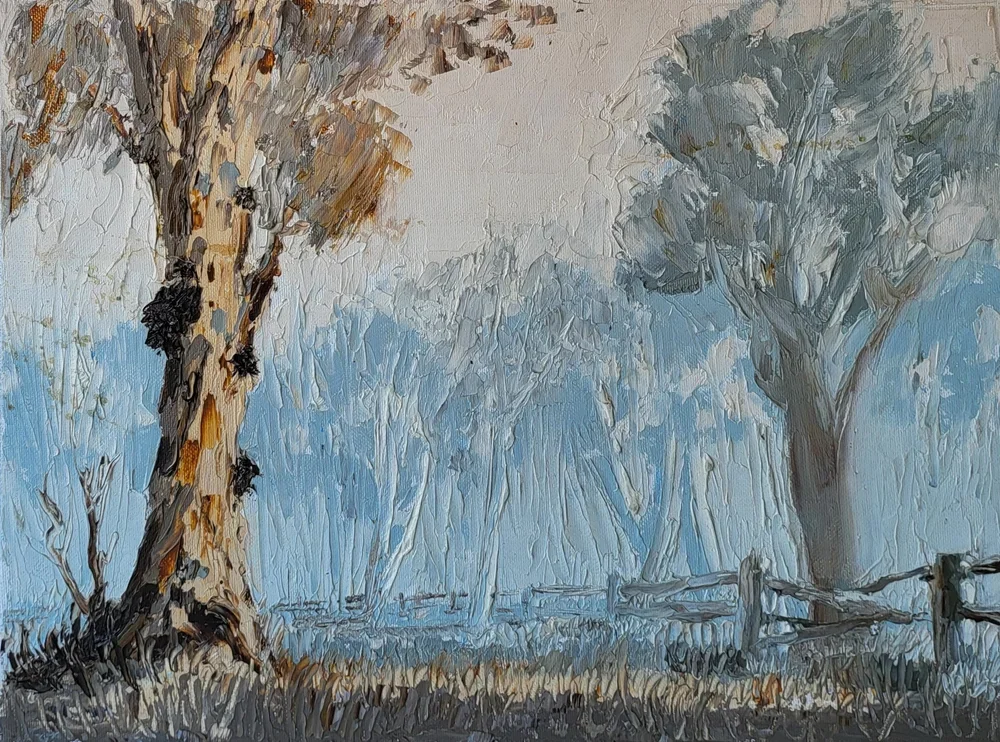
The Old Fence
c. 1980s | Oil on board
A compact Australian bush landscape featuring a weathered split-rail fence receding into a cool, mist-filled woodland.
Dominated by a striking river red gum in the foreground, the composition employs vigorous palette-knife work and broken colour to capture the crisp atmosphere of an early morning in the Australian bush.
The restrained palette of soft blues, greys and warm ochres creates a quiet sense of depth while emphasising the enduring forms of native trees and rural fencing.
-
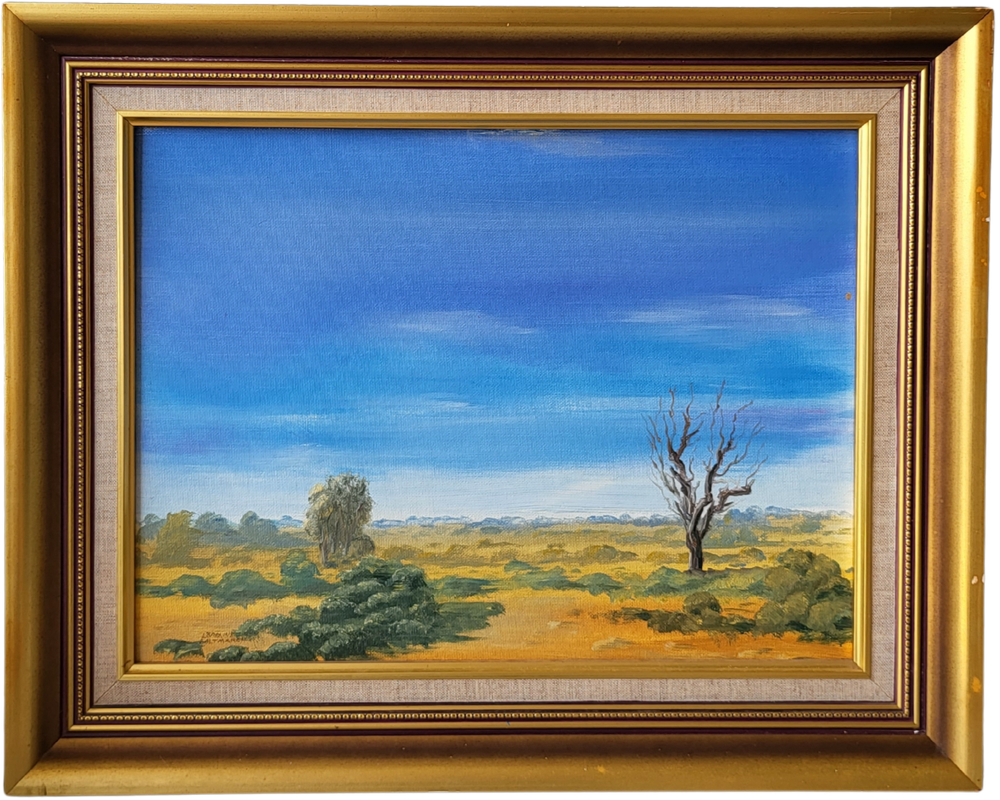
Endless Sky
c. 1980s | Oil on board
A striking Australian landscape celebrating the immense scale and atmosphere of the open plains beneath an expansive sky.
Lorraine Saltmarsh places the horizon low within the composition, allowing sweeping gradients of deep cobalt and soft azure to dominate the scene, while scattered native shrubs and distant eucalypts stretch across the sunlit landscape.
A solitary leafless tree stands in quiet contrast to the living vegetation nearby, introducing a subtle sense of endurance and the cyclical nature of the Australian environment.
Painted in a restrained naturalistic style, Endless Sky captures the profound openness of the inland landscape, where the vastness of the sky becomes the defining feature of place. The balanced composition and luminous colour palette evoke both tranquillity and the timeless beauty of regional Australia.
-
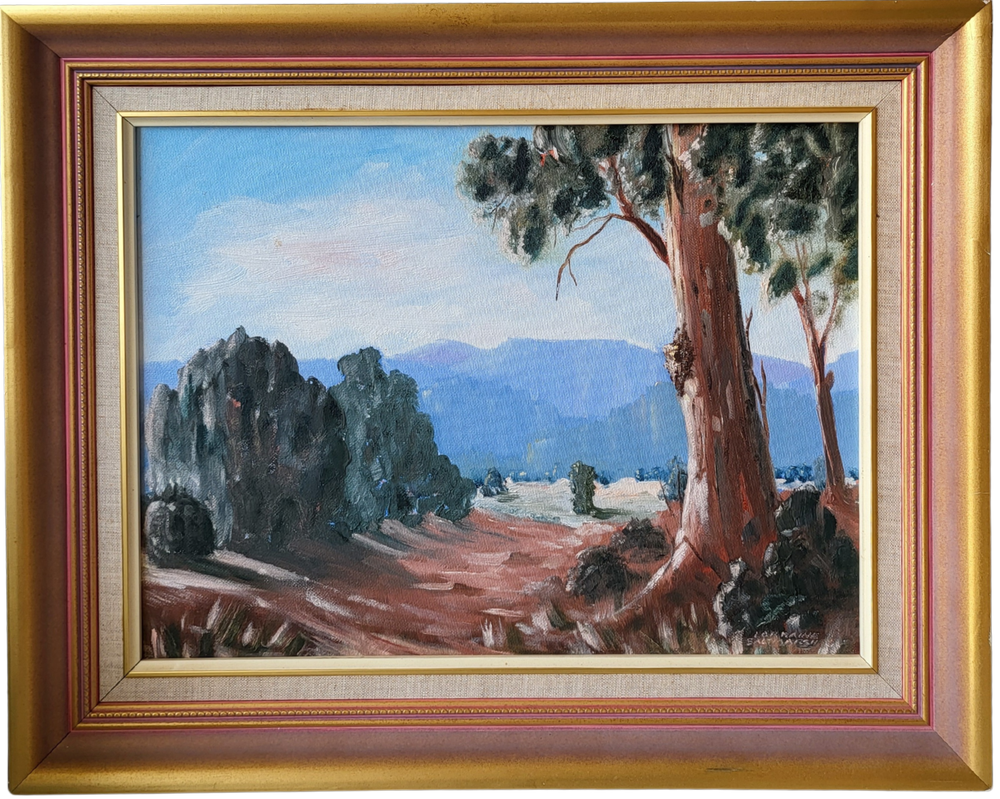
Tracks To The Ranges
c. 1980s | Oil on board
A tranquil Australian landscape depicting a well-worn bush track leading the eye towards distant mountain ranges beneath a clear blue sky.
Dominated by mature river red gums and native scrub, the composition captures the openness of the Australian countryside through balanced perspective, soft atmospheric recession and warm earth tones.
The prominent foreground eucalyptus provides a strong vertical anchor, while the receding landscape conveys a sense of quiet distance and familiarity characteristic of Lorraine Saltmarsh's mature landscape paintings.
-
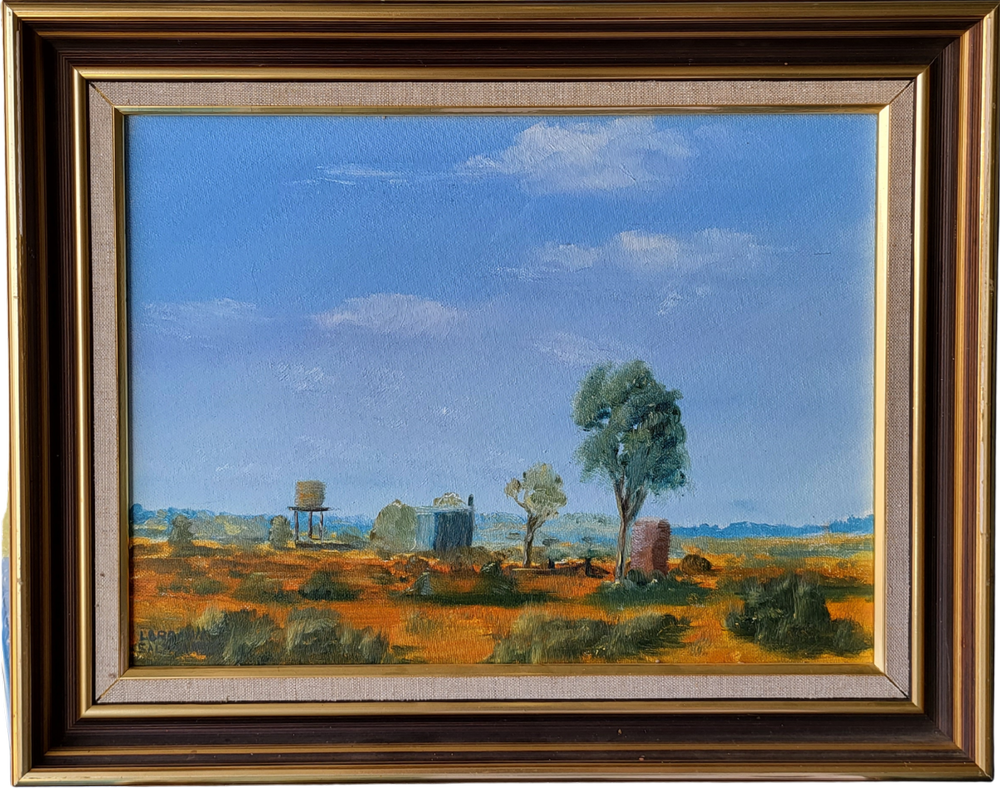
Murray Bushland - Backwater
c. 1980s | Oil on board
A tranquil Australian landscape depicting a well-worn bush track leading the eye towards distant mountain ranges beneath a clear blue sky.
Dominated by mature river red gums and native scrub, the composition captures the openness of the Australian countryside through balanced perspective, soft atmospheric recession and warm earth tones.
The prominent foreground eucalyptus provides a strong vertical anchor, while the receding landscape conveys a sense of quiet distance and familiarity characteristic of Lorraine Saltmarsh's mature landscape paintings.
-
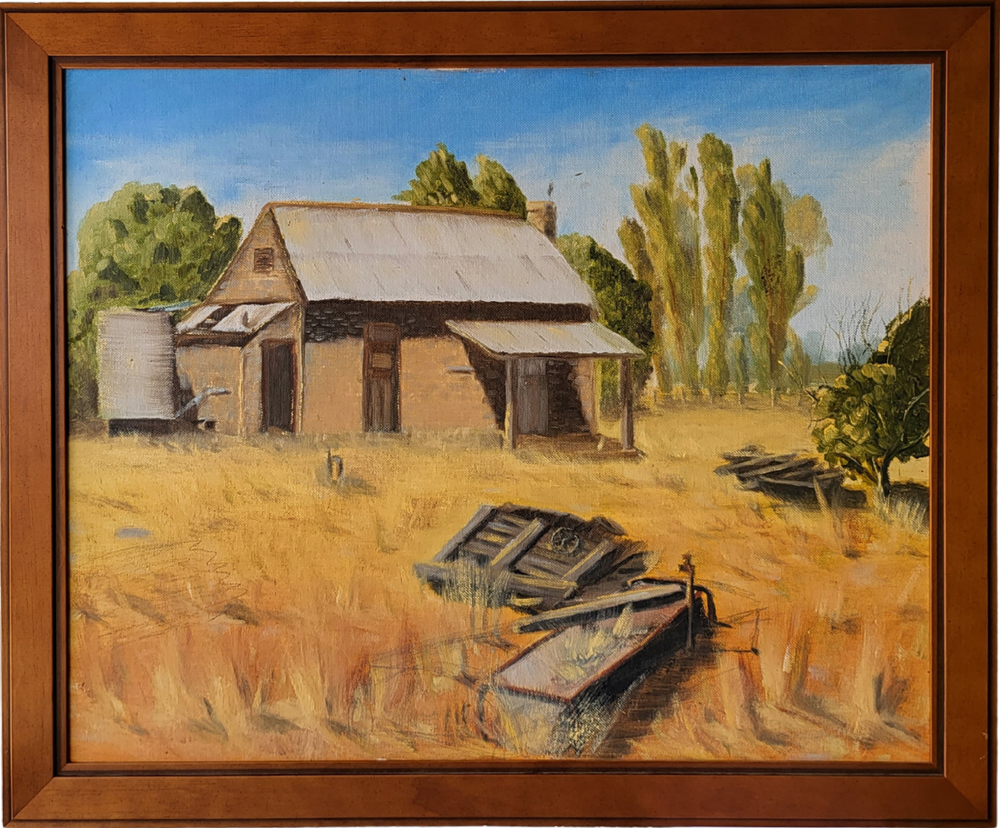
More Than A Century
c. 1980s | Oil on board
An evocative rural homestead portrait depicting a weathered farmhouse standing quietly within a sunlit paddock of dry golden grasses.
Farm equipment, fencing timbers and an old galvanised bathtub lie abandoned in the foreground, while mature poplars and native vegetation frame the historic dwelling.
Painted in warm ochres and soft greens beneath a clear blue Australian sky, the work celebrates the enduring presence of early settlement buildings within the changing rural landscape.
Executed with confident, naturalistic brushwork, Lorraine Saltmarsh balances architectural detail with atmospheric light, allowing the humble farmhouse to become both the visual and emotional centre of the composition.
-
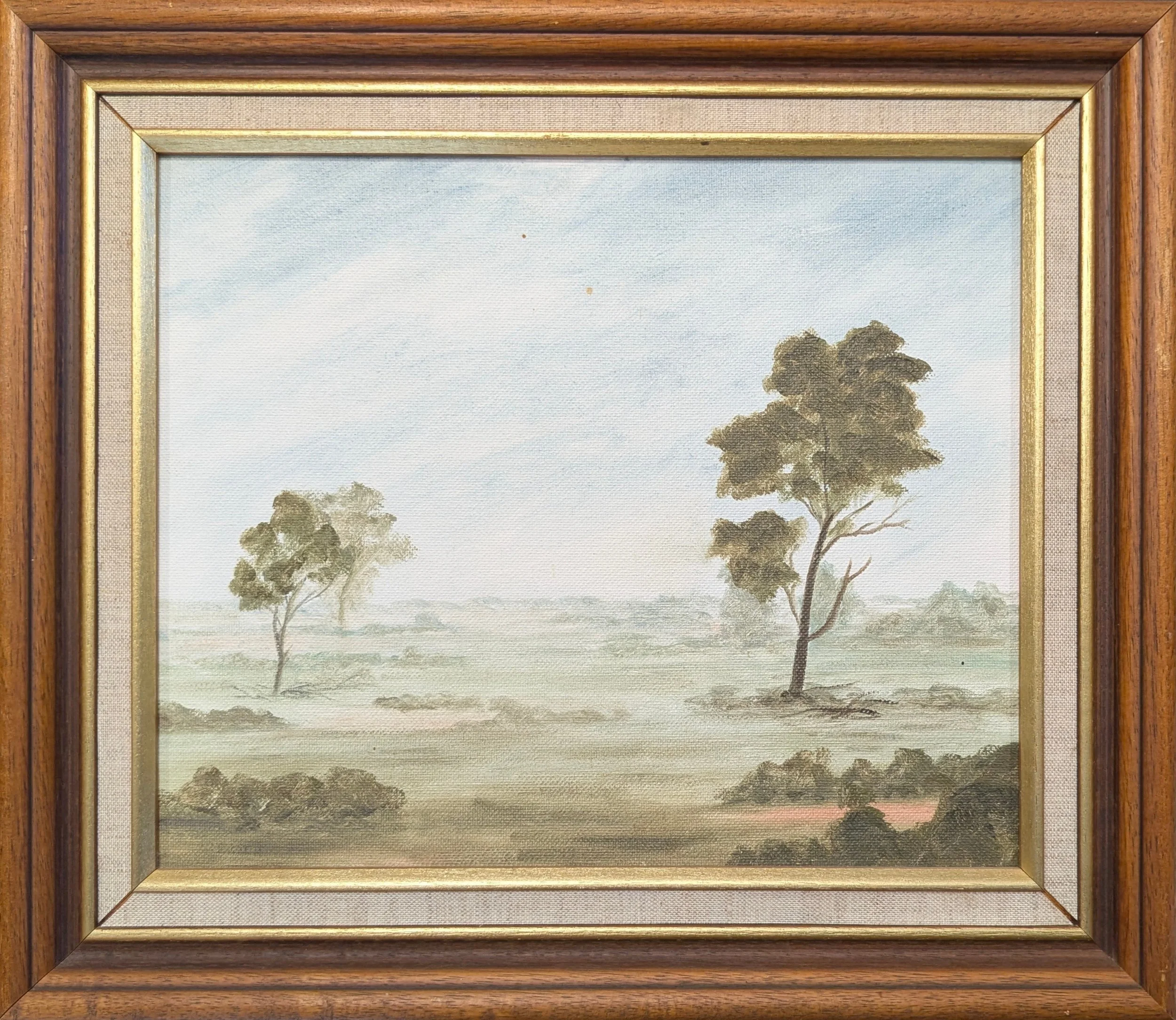
Outback Scene
c. 1980s | Oil on board
A subtle atmospheric landscape depicting the Australian interior beneath a pale, expansive sky.
Two eucalypts emerge from a softly rendered plain, their forms fading into distant haze that conveys the immense scale and quiet solitude of the outback.
Using restrained earth tones and delicate transitions of light, Lorraine Saltmarsh creates a contemplative study of distance and atmosphere, celebrating the understated beauty of Australia's inland country.
-
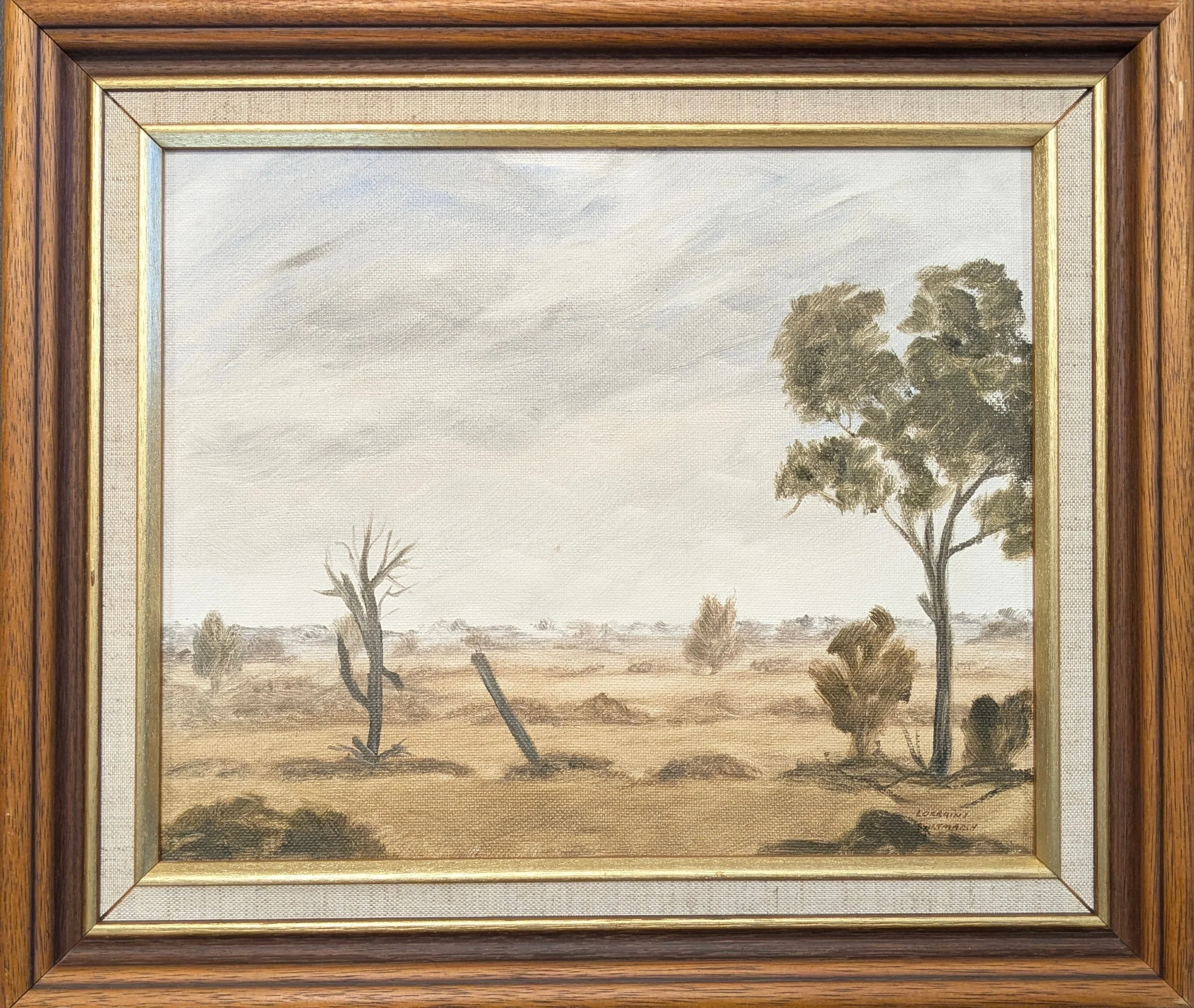
Out Booligal Way
c.1980s | Oil on board
A restrained study of the western plains near Booligal, New South Wales, capturing the stark beauty of Australia's semi-arid interior.
A lone living gum stands alongside a weathered dead tree and leaning fence post, suggesting the endurance of life within an unforgiving landscape.
Painted in muted ochres, greys and soft greens beneath an expansive sky, the composition reflects Lorraine Saltmarsh's appreciation for the quiet character of remote rural Australia and her ability to convey atmosphere through simplicity.
-
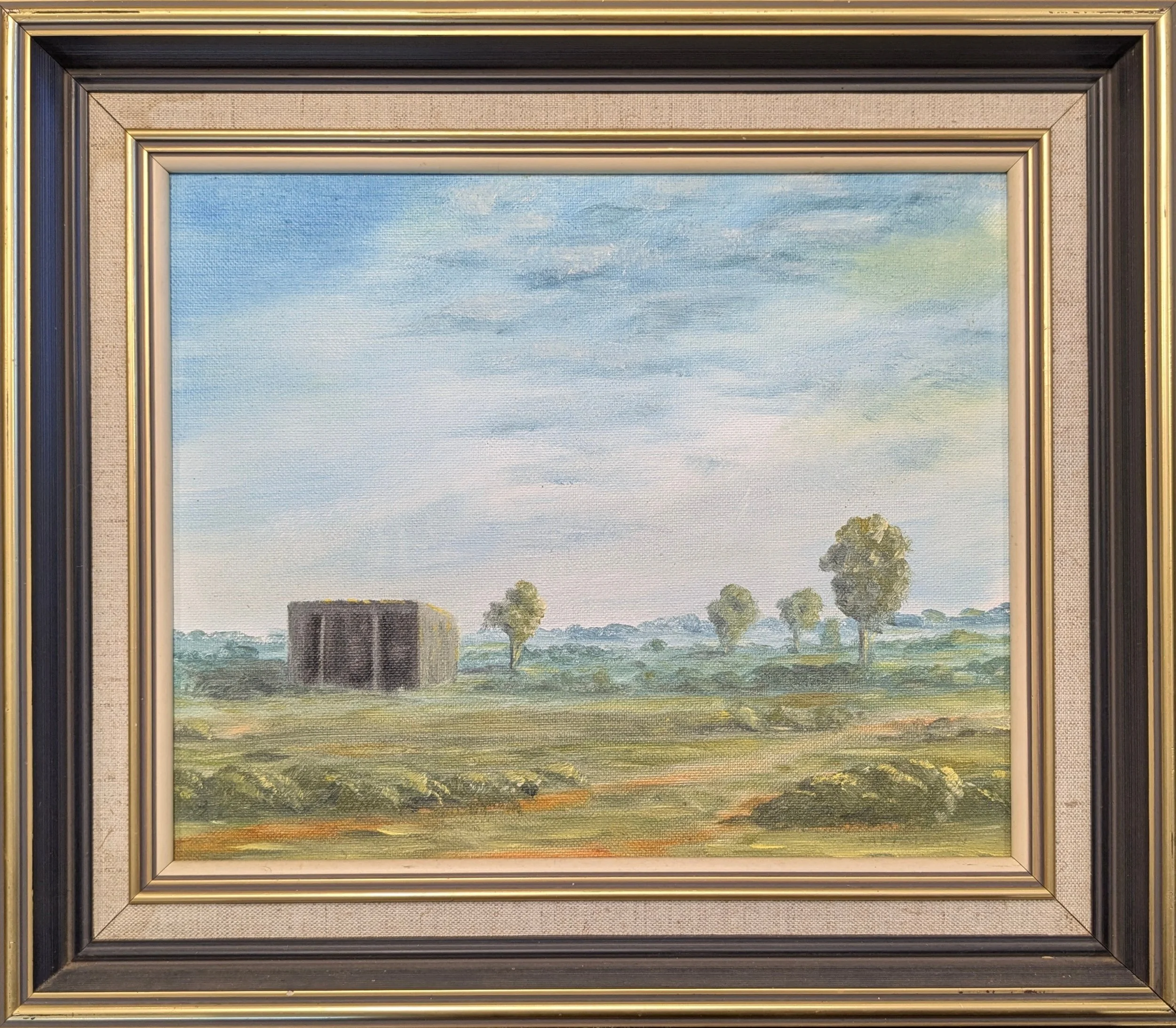
The Plains Turned Green
c. 1980s | Oil on board
A minimalist outback landscape depicting the broad plains surrounding Ivanhoe, New South Wales, after seasonal rain.
A solitary rural shed anchors the composition against expansive skies and rejuvenated pasture, conveying the immense scale and quiet resilience of Australia's inland country.
Lorraine Saltmarsh employs restrained brushwork and a subdued palette to emphasise atmosphere over detail, creating a contemplative study of the western plains transformed by rain.
-
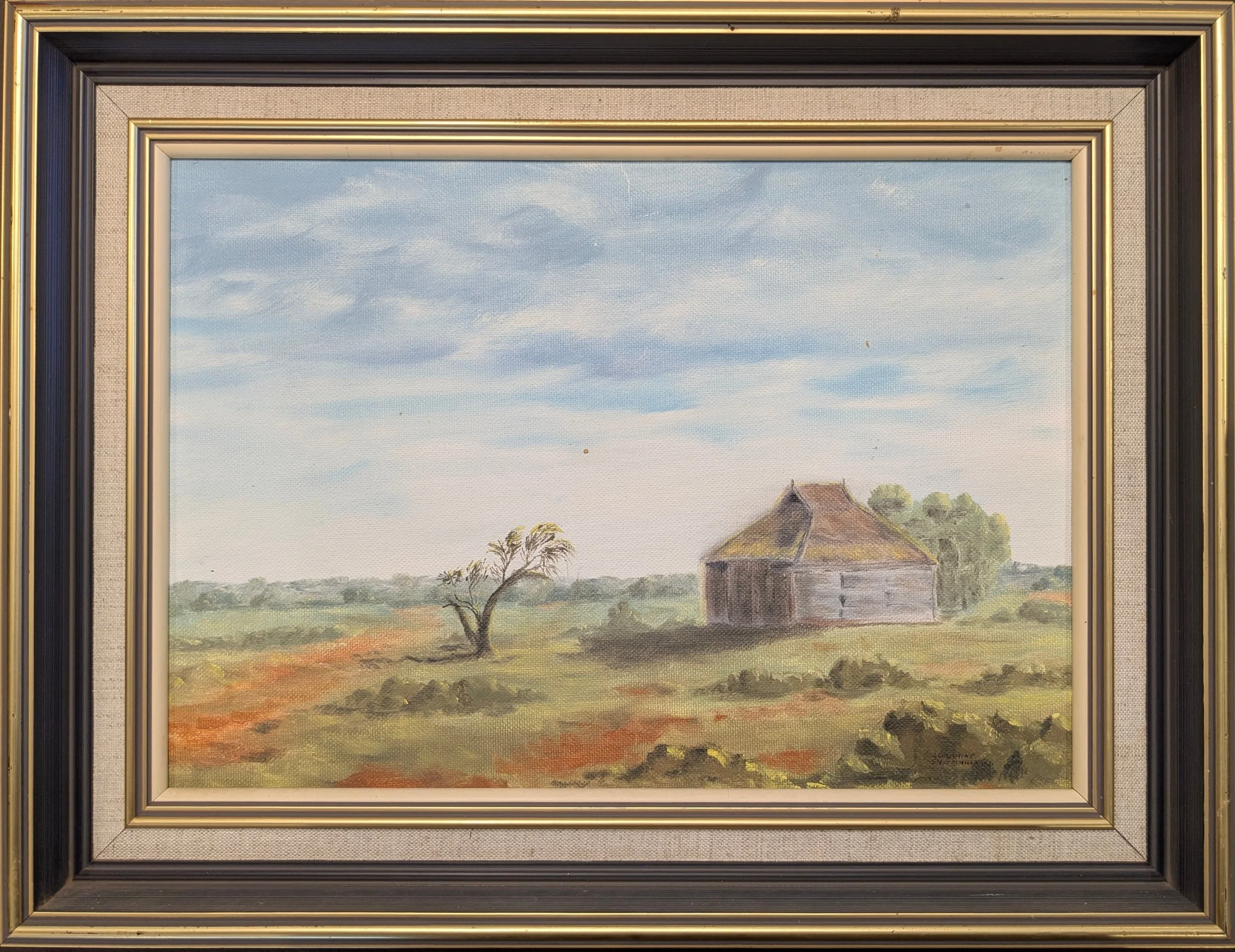
Outback Wunghu
c.1970s | Oil on board
A peaceful depiction of an isolated nineteenth-century timber homestead standing in open grazing country near Wunghnu, Victoria.
Painted with restrained earth tones and expansive sky, the composition conveys the quiet endurance of Australia's rural heritage.
The handwritten title and date on the reverse provide excellent provenance, making this one of the better-documented works within Lorraine Saltmarsh's collection.
-
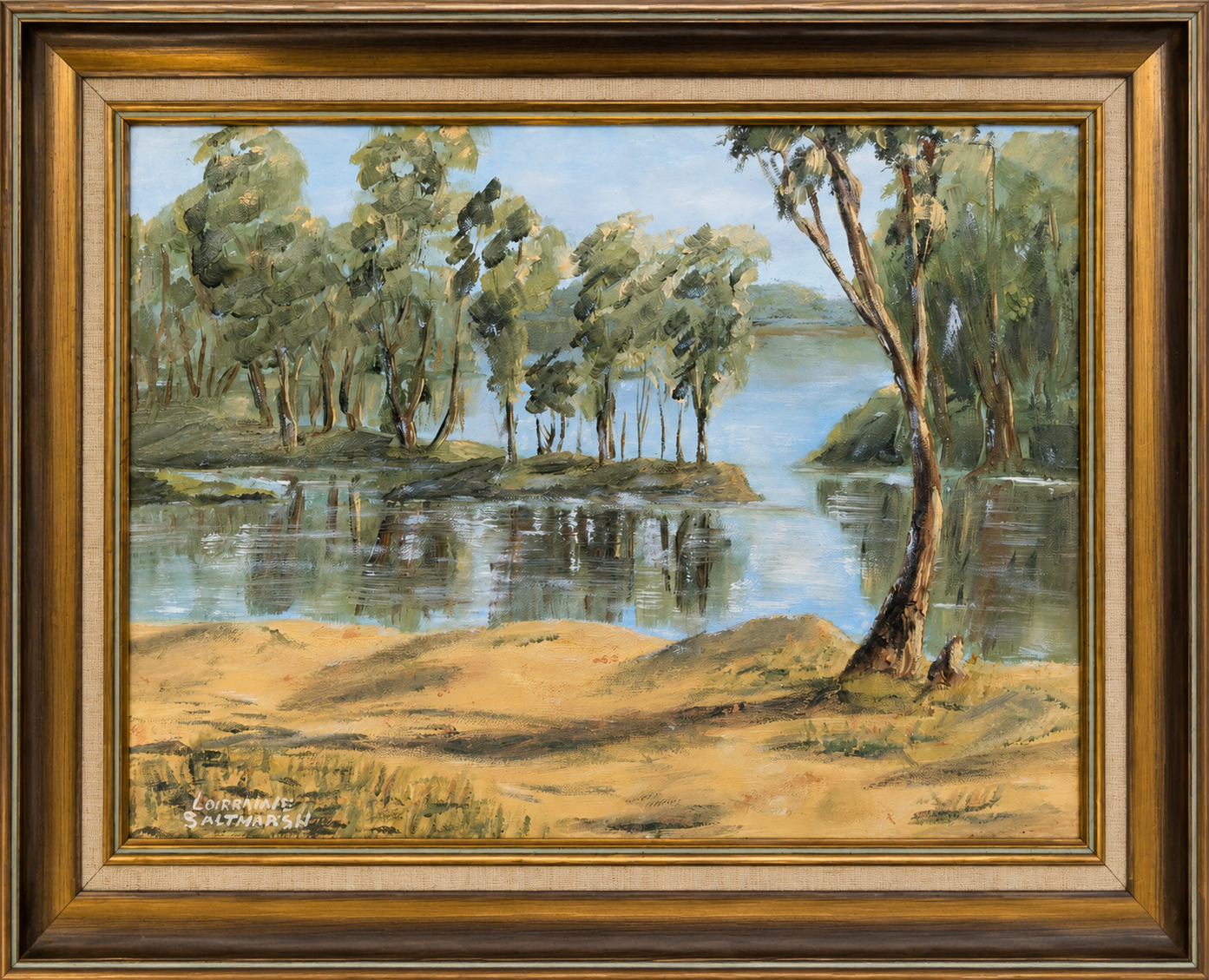
Mount Gwynne Beach
c. 1970s | Oil on board
A peaceful Murray River landscape showing a sandy riverbank in the foreground with eucalypts reflected in still water.
The composition balances an open foreground with softly modelled tree forms and gentle atmospheric perspective, capturing the quiet character of the river near Mount Gwynne.
Executed in Lorraine Saltmarsh's mature landscape style with restrained colour, confident brushwork and delicate reflections.
-
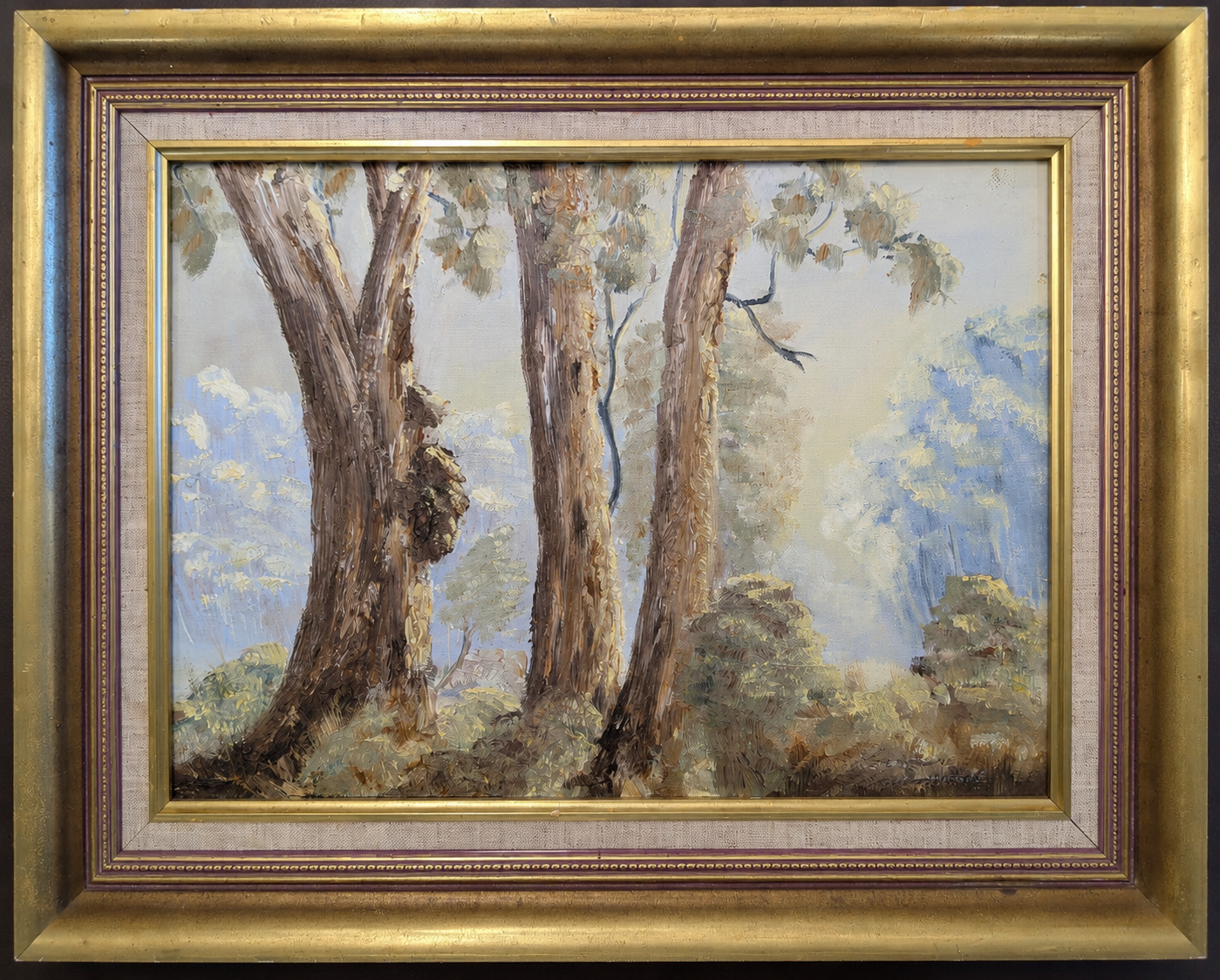
Bushland Glow
c. 1970s | Oil on board
A tranquil Australian bush study depicting mature eucalyptus trees illuminated by warm afternoon light.
Thick, confident palette-knife work on the trunks contrasts with softly rendered foliage and a luminous blue background, creating depth and atmosphere.
The composition demonstrates Lorraine Saltmarsh's mature landscape style, balancing textured foreground detail with an airy, impressionistic treatment of the surrounding bush.
-
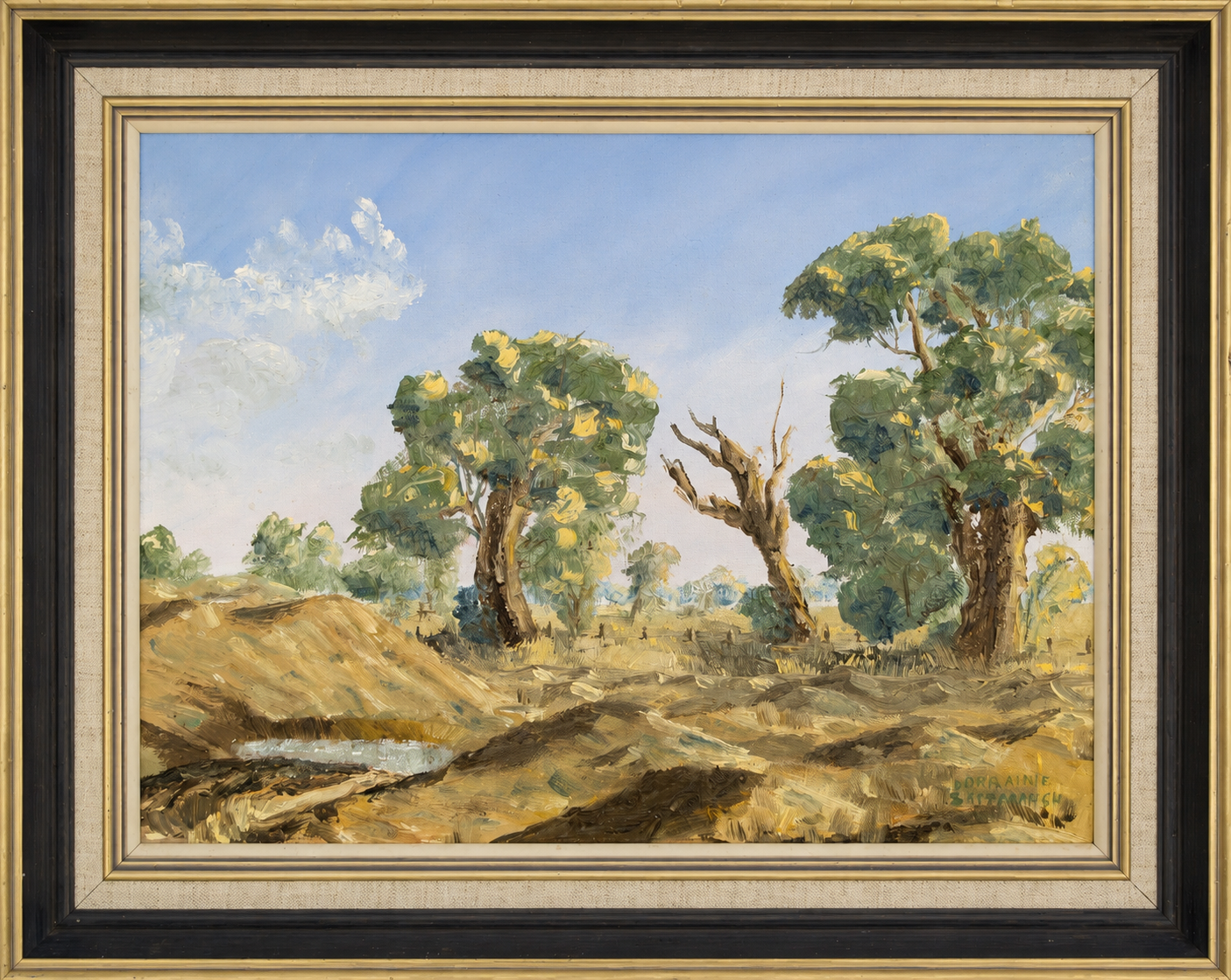
The Rocks, Tocumwal
c. 1990s | Oil on board
A warm pastoral landscape depicting the distinctive river red gums and weathered rocky country around Tocumwal on the Murray River.
Executed with confident impasto brushwork and a restrained natural palette, the work captures the dry summer light and rugged character of northern Victoria and southern New South Wales.
The composition balances mature eucalypts with a prominent dead tree, creating a strong sense of age, resilience and the Australian bush. A representative example of Lorraine Saltmarsh's mature landscape style.
-
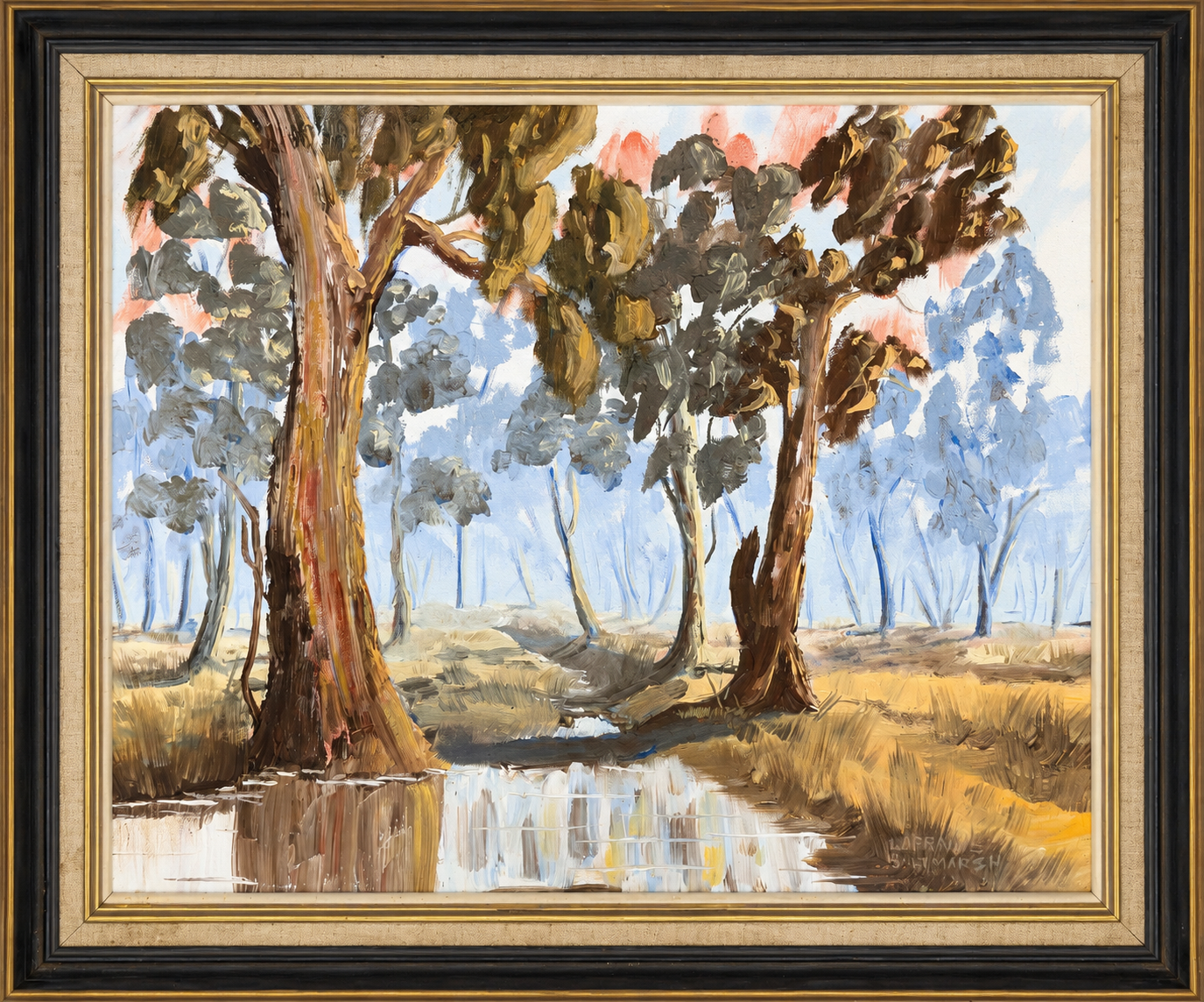
Flooded Gums
c. 2000s | Oil on board
Strong, expressive brushwork captures the reflections of towering river gums in calm water, reducing the landscape to rhythm, colour and light.
Rather than focusing on fine detail, Lorraine Saltmarsh allows broad, confident strokes to convey the atmosphere of a quiet Australian wetland.
The composition blurs the boundary between land and reflection, inviting the viewer to linger and discover the landscape through texture and movement.
-
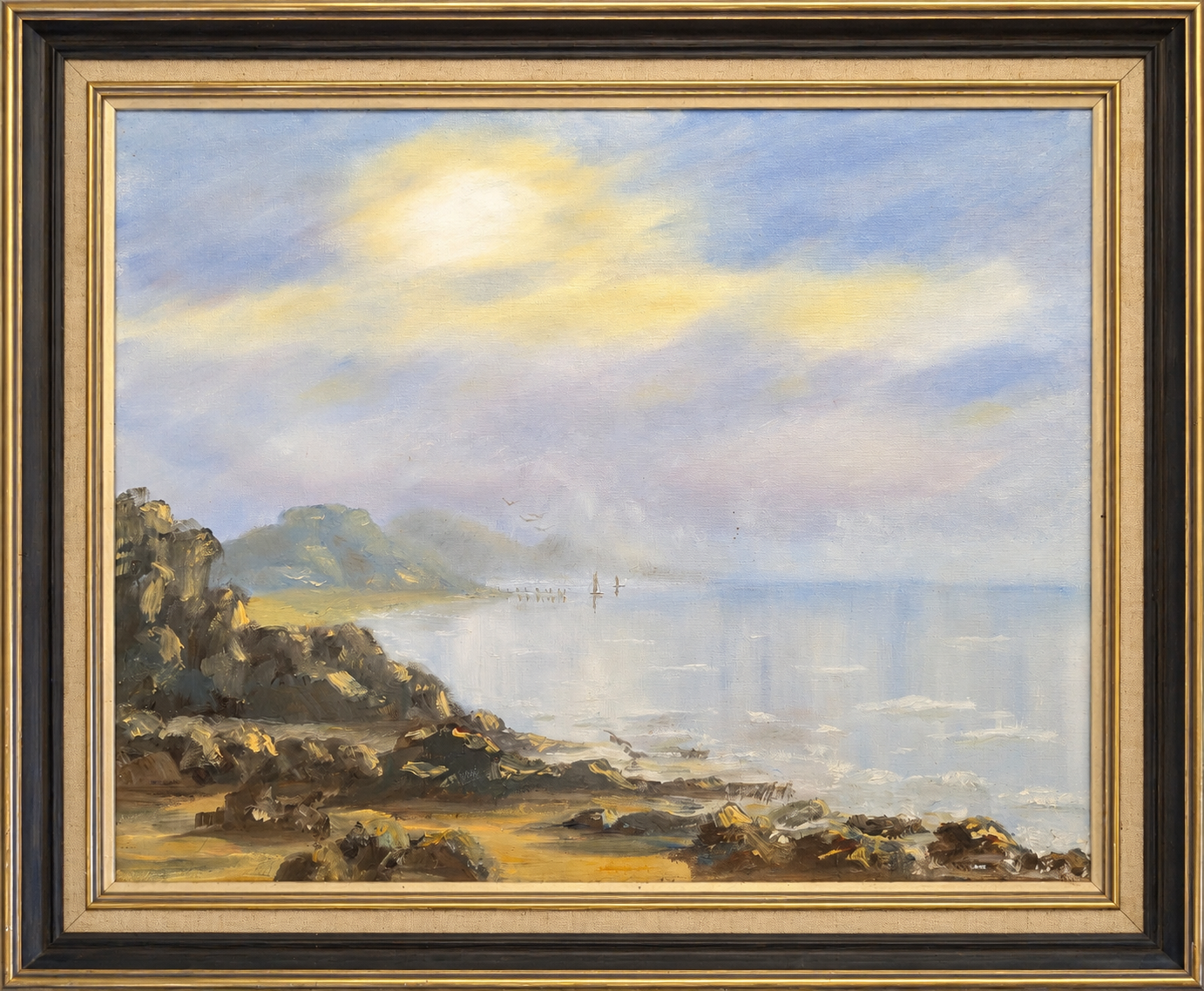
By The Sea
c. 1990s | Oil on board
By The Sea is a quiet, atmospheric coastal landscape that demonstrates Lorraine Saltmarsh's ability to capture mood through restrained colour and soft tonal transitions.
A rocky shoreline leads the eye toward distant headlands and calm waters beneath a luminous morning sky, where delicate washes of light dissolve into mist across the horizon.
Unlike many traditional coastal scenes that rely on dramatic surf or rugged cliffs, this work embraces stillness.
The subtle handling of light, the muted palette, and the expansive negative space evoke the calm often experienced on Victoria's coastline at first light.
Small distant boats and birds provide gentle focal points without disturbing the overall serenity.
The painting reflects Saltmarsh's mature landscape style - less concerned with topographical accuracy than with atmosphere and emotional response. It is a contemplative work that rewards prolonged viewing and sits comfortably among her strongest coastal paintings.
-
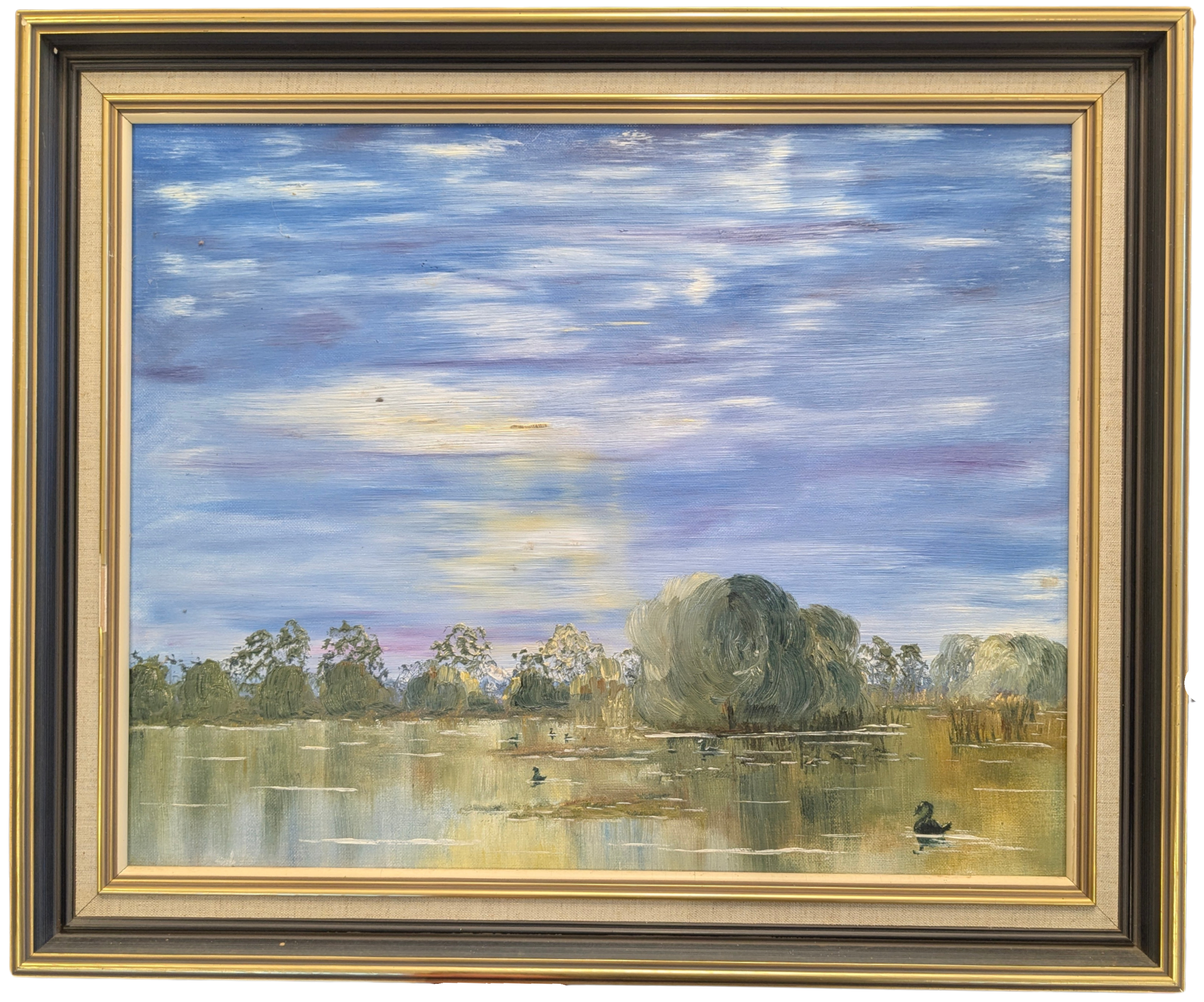
Lake Moulamein
c. 1980s | Oil on board
Lake Moulamone presents one of Lorraine Saltmarsh's characteristic Murray River landscapes, depicting the tranquil wetlands of Lake Moulamone near Barooga, New South Wales.
The expansive sky dominates the composition, its soft blues, mauves and warm creams reflected across the still water below.
Scattered waterbirds and gently rounded river gums lend the scene a quiet sense of scale, while broad, expressive brushwork captures the changing light rather than minute detail.
Unlike many of Saltmarsh's more tightly rendered landscapes, this work embraces a freer, more impressionistic handling of paint.
The restrained palette and atmospheric reflections evoke the calm of the wetlands at either dawn or dusk, celebrating the understated beauty of one of the Murray region's most significant natural environments.
Although unsigned, the painting displays many of the artist's characteristic qualities, including her treatment of river gums, expansive skies and reflective waterways, making attribution to Lorraine Saltmarsh highly convincing.
-
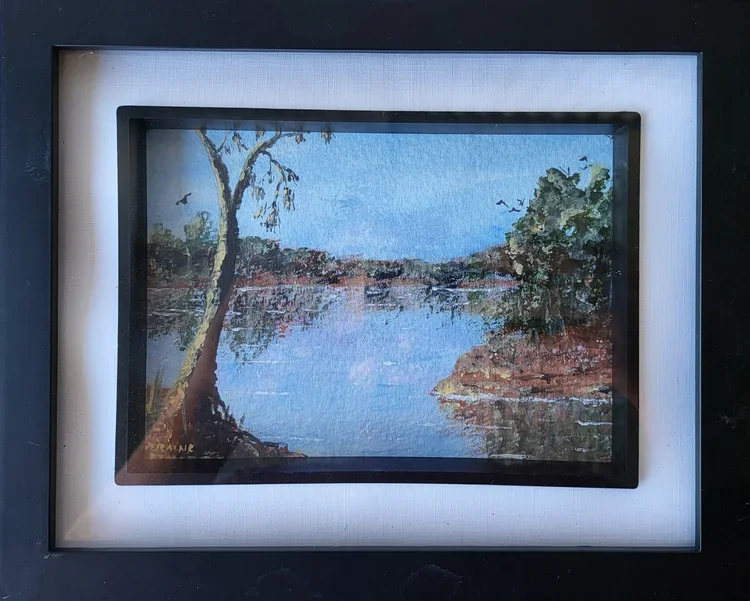
River Reflections
c. 2000s | Watercolour on paper
A tranquil watercolour depicting a broad Murray River scene under clear skies, with still water reflecting the surrounding riverbanks, mature river gums and native vegetation.
Executed in Lorraine Saltmarsh's characteristic loose yet controlled style, the work relies on transparent washes and subtle layering to capture the shimmering light and quiet atmosphere of inland Victoria.
The composition draws the eye naturally into the distance, where the river gently narrows between wooded banks.
-
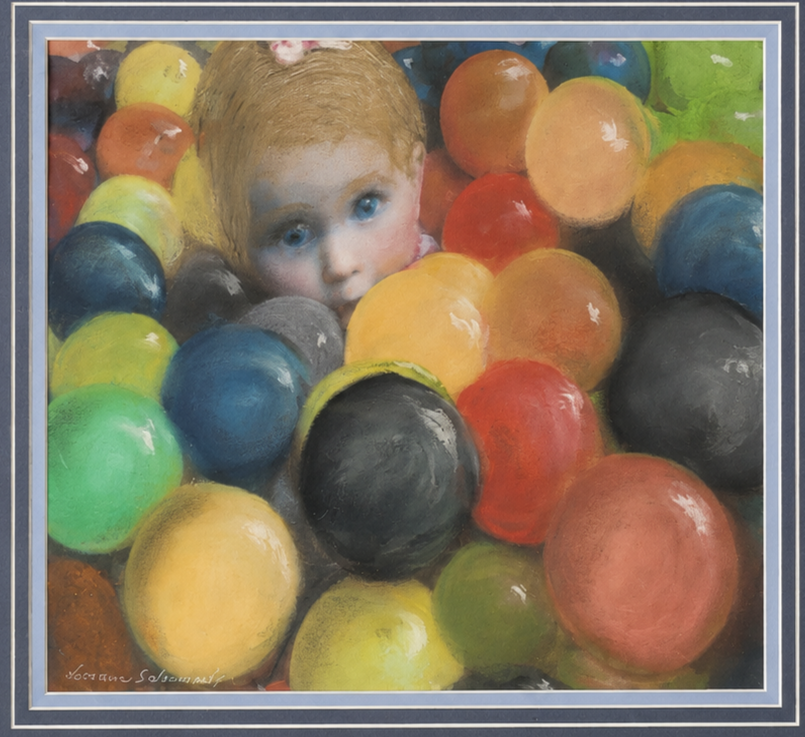
Which One Is Me
c. 2010s | Pastel on paper
A playful contemporary pastel depicting a young child almost concealed beneath the brightly coloured balls of a children's ball pit.
Only the child's inquisitive blue eyes and face emerge from the sea of vibrant spheres, creating a composition that is both humorous and engaging.
The contrast between the softly modelled portrait and the glossy, highly saturated balls demonstrates Lorraine Saltmarsh's versatility beyond her traditional landscape practice and reflects her later interest in contemporary subjects and family life.
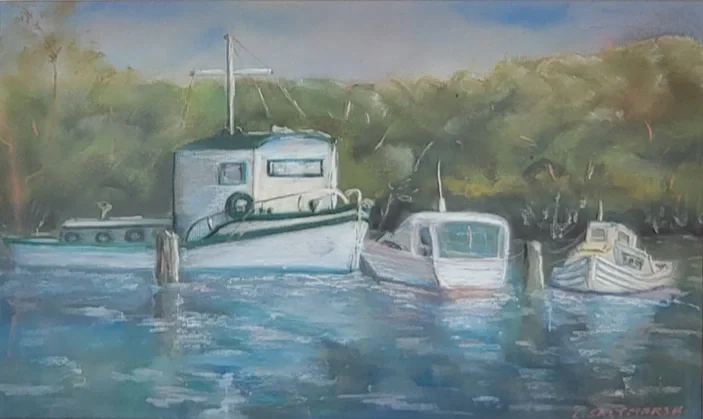
Boats In The Backwater
c. 1990s | Pastel on paper
A peaceful riverside scene depicting three moored working boats resting in calm backwaters bordered by dense native vegetation.
Executed in soft pastel with gentle blending and muted natural colours, the work captures the quiet atmosphere of Australia's inland waterways through delicate reflections and an understated palette.
The composition reflects Lorraine Saltmarsh's interest in regional landscapes and working river environments, favouring mood and tranquillity over detailed realism.
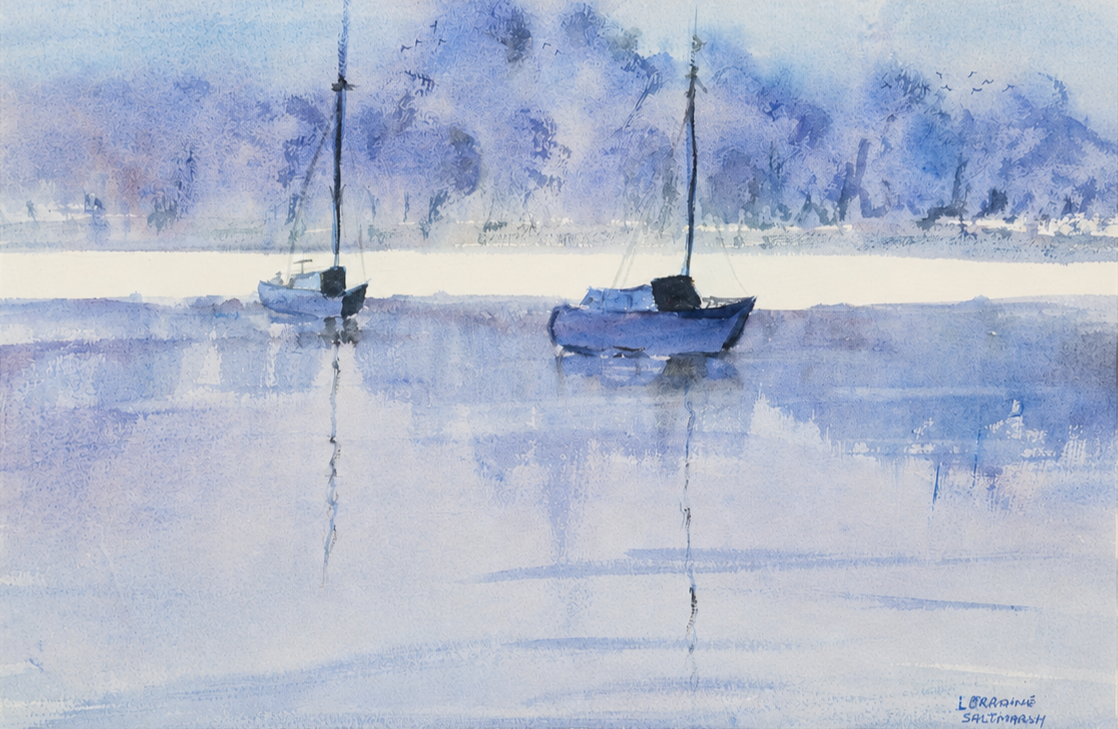
Morning Moorings
c. 1990s | Watercolour on paper
This work represents Lorraine Saltmarsh's more impressionistic watercolour style, where atmosphere takes precedence over detail.
The limited palette and economical brushwork create a sense of tranquillity, inviting the viewer to experience the stillness of an early morning on sheltered water.
-
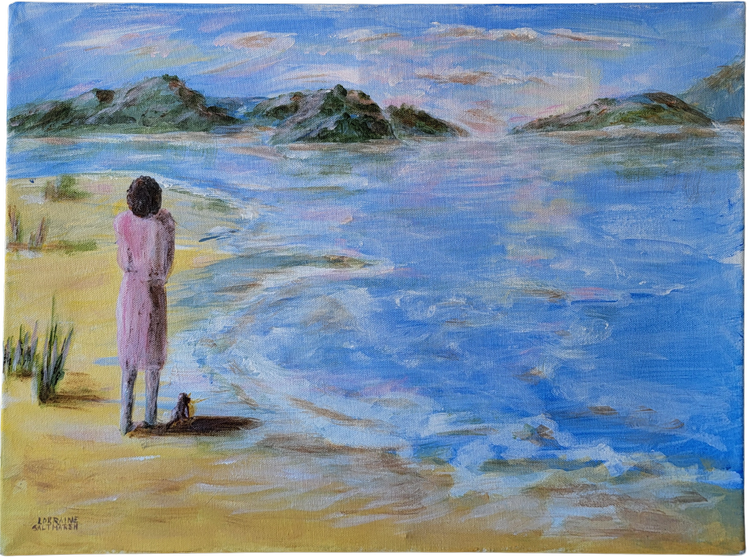
Can't Be Far Away Now
c. 2010s | Oil on canvas
Painted in 2013, Can't Be Far Away Now is one of Lorraine Saltmarsh's most poignant and deeply personal works.
Created following the passing of her husband, Max, the painting depicts a solitary woman standing quietly at the edge of a tranquil shoreline, accompanied only by a faithful dog as she gazes across calm waters towards distant islands on the horizon.
Executed in oil on canvas, the composition employs soft blues, muted sands and gentle brushwork to create an atmosphere of quiet reflection.
The expansive sea and open sky evoke both physical distance and emotional longing, while the restrained palette allows the work's narrative to emerge through mood rather than symbolism.
The title carries profound personal meaning. According to the artist's family, the painting represents Lorraine's enduring belief that her husband was never truly gone - that although separated by death, he remained close in spirit.
The distant horizon becomes a metaphor for love beyond reach, while the figure's patient stance conveys hope, remembrance and the enduring bond between two people separated only by time.
Rather than portraying grief as despair, Can't Be Far Away Now speaks of faithful waiting and quiet companionship.
It stands as both a memorial to Max Saltmarsh and one of the most emotionally significant works within Lorraine Saltmarsh's artistic legacy, demonstrating her ability to transform personal loss into a universal expression of love, memory and hope.
-
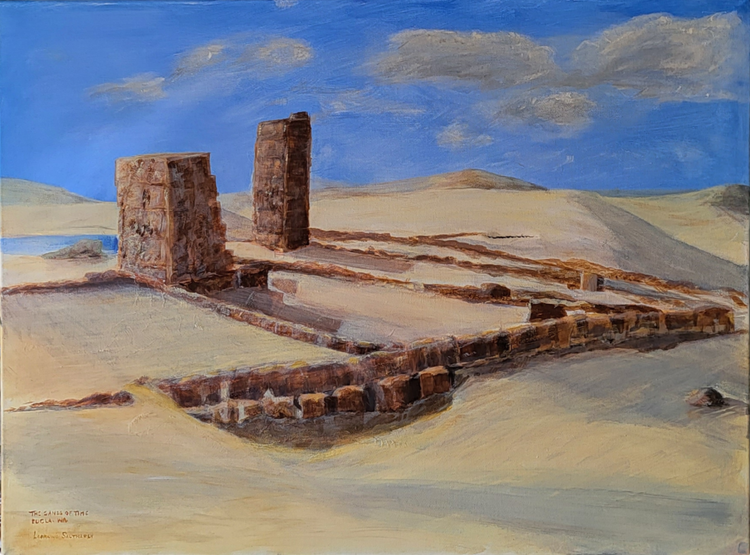
Sands Of Time
c. 2000s | Acrylic on canvas
An evocative architectural landscape depicting the weathered remains of an ancient desert settlement emerging from sweeping sand dunes beneath an expansive blue sky.
The composition centres on two surviving stone towers and the foundations of long-lost structures, their warm earth tones contrasting with the cool blues of the sky and the soft cream hues of the surrounding desert.
Through restrained colour and confident brushwork, Lorraine Saltmarsh creates a scene that speaks of endurance, memory and the passage of civilisation through time.
-
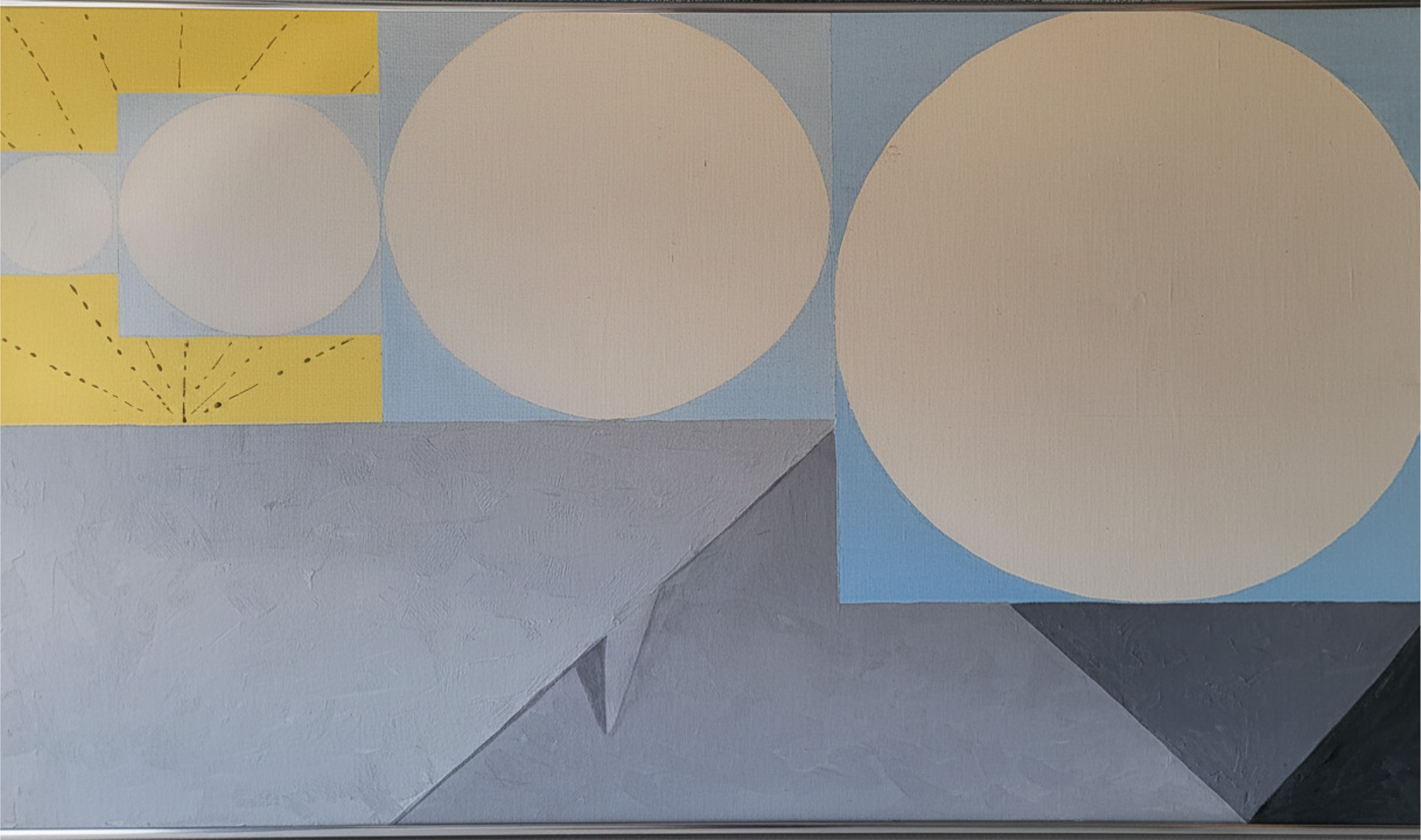
Study Of Shapes
c. 1980s | Acrylic on board
An abstract geometric composition exploring scale, perspective and spatial relationships through repeated circular forms and intersecting planes.
Executed in a restrained palette of pale blue, warm cream, yellow and graduated greys, the work demonstrates an investigation into proportion, architectural space and visual rhythm.
The precise edges and carefully balanced composition suggest it was created as a formal design study, reflecting Lorraine Saltmarsh's interest in artistic technique and experimentation beyond her better-known landscape and wildlife subjects.
The McNeil Academy of Realist Art
Lorraine’s artistic journey was shaped not only by imagination and lived experience, but also by years of disciplined study and practice.
During her completion of a Certificate III in Painting through the McNeill Academy of Realist Art in Finley, Lorraine developed a strong grounding in colour theory, composition, tonal studies, and classical painting techniques.
This collection (available by selecting the “A Study…” links) offers a glimpse into her student classwork — studies, exercises, and exploratory pieces that reveal the foundations of her creative process and the quiet dedication behind her later works.