Noel Westgate
Collection
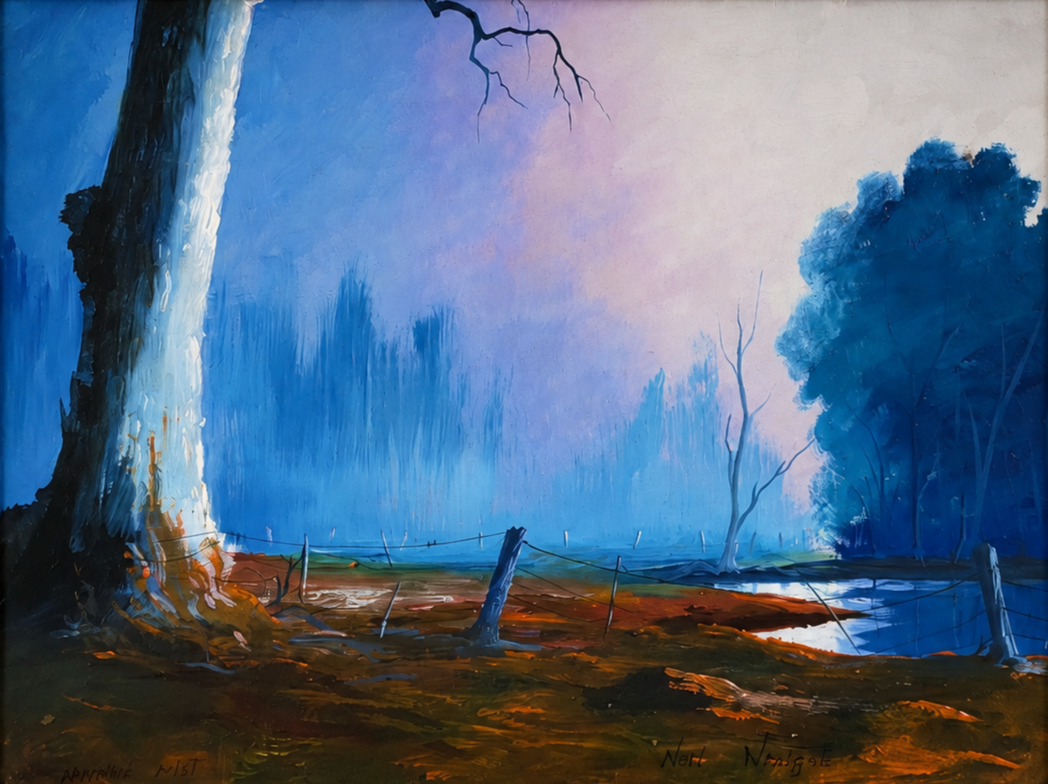
Morning Mist
c. 1970s | Oil on board
A cool morning mist hangs over a quiet paddock, where a monumental river gum dominates the foreground. A weathered post-and-wire fence leads the eye toward a still watercourse before disappearing into layers of blue haze and distant timber.
The dramatic contrast between the brilliant white trunk, deep ultramarine shadows and warm ochre earth creates a striking sense of atmosphere and depth.
-
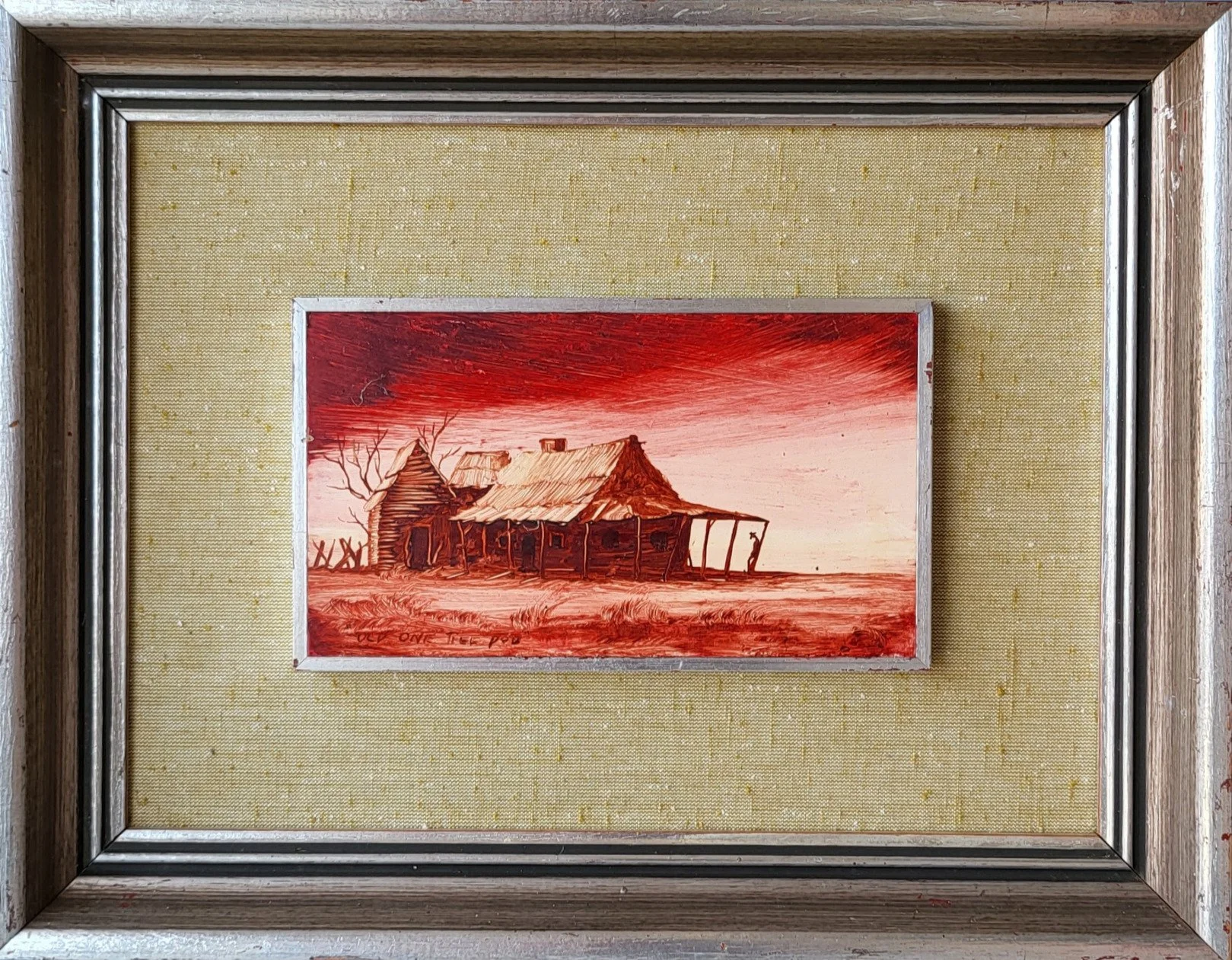
Old One Tree Pub
c. 1970s | Sgraffito
An abandoned timber hotel stands alone against an expansive Australian sky, rendered entirely in deep crimson and sepia tones.
The weathered verandah, leaning fence lines and bare tree evoke the decline of isolated bush settlements while celebrating the character of Australia's pastoral history.
Westgate uses the sgraffito technique (scratching through coloured layers to reveal fine highlights) to create remarkable detail in the corrugated roof, timber slabs, grasses and dramatic cloud formations.
The limited palette heightens the emotional impact, giving the scene the appearance of a sunset, bushfire glow, or aged photographic print.
-
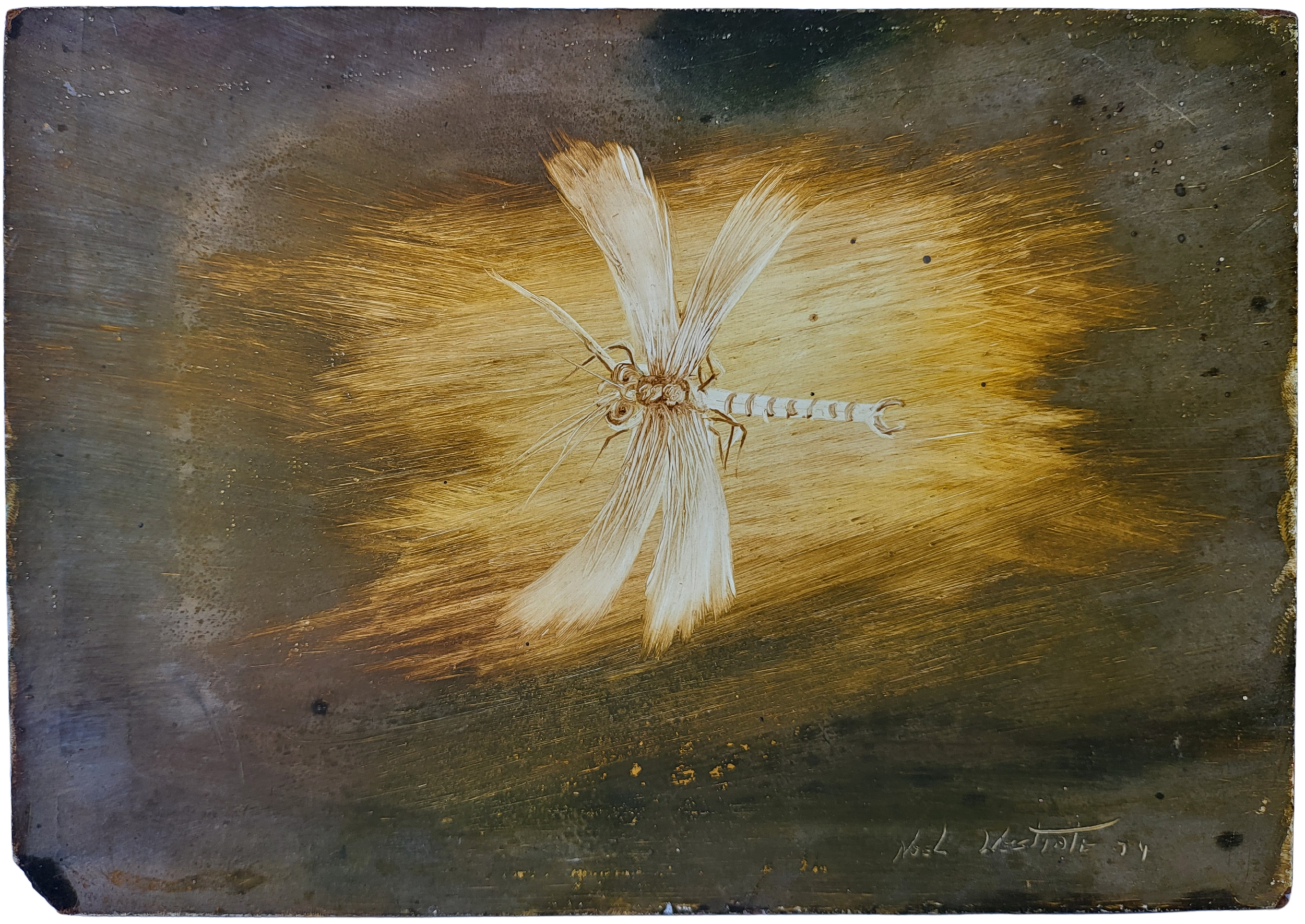
Yellow Insect Study
c. 1970s | Sgraffito
Produced alongside its companion work Red Insect Study, Yellow Insect Study presents a dragonfly suspended within a luminous golden field.
The composition is executed using the sgraffito technique, where the artist scratches through the painted surface to reveal the lighter substrate beneath, creating exceptionally fine linear detail.
The warmer palette produces a softer, almost ethereal effect compared with its companion.
Delicate incised marks describe the insect's transparent wings and segmented form while broad scratched strokes create a radiant halo that emphasises movement and light.
The work highlights Westgate's willingness to explore alternative techniques beyond landscape painting.
-
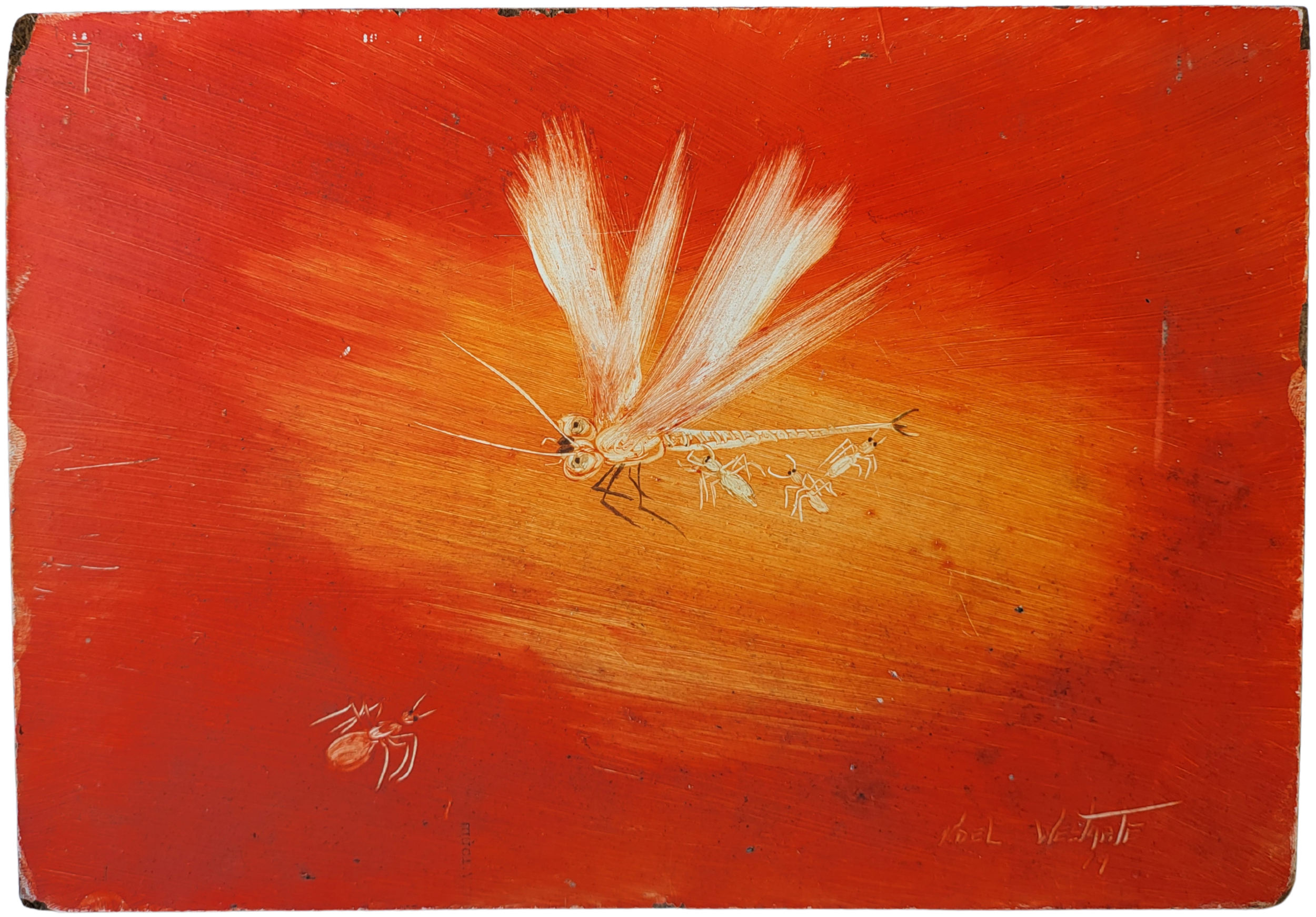
Red Insect Study
c. 1970s | Sgraffito
Red Insect Study is an unusual example of Noel Westgate's experimentation with the sgraffito technique.
The composition depicts a dragonfly hovering against a brilliant red field, accompanied by smaller insects scratched into the surface with remarkable delicacy.
Rather than relying on paint, the artist uses incised lines to reveal the pale substrate beneath the coloured ground, producing an image defined almost entirely by light.
The dramatic red background intensifies the graphic quality of the work, while the careful rendering of wings, segmented body and tiny companion insects demonstrates Westgate's patience and draughtsmanship.
The result is both decorative and highly distinctive within the artist's known body of work.
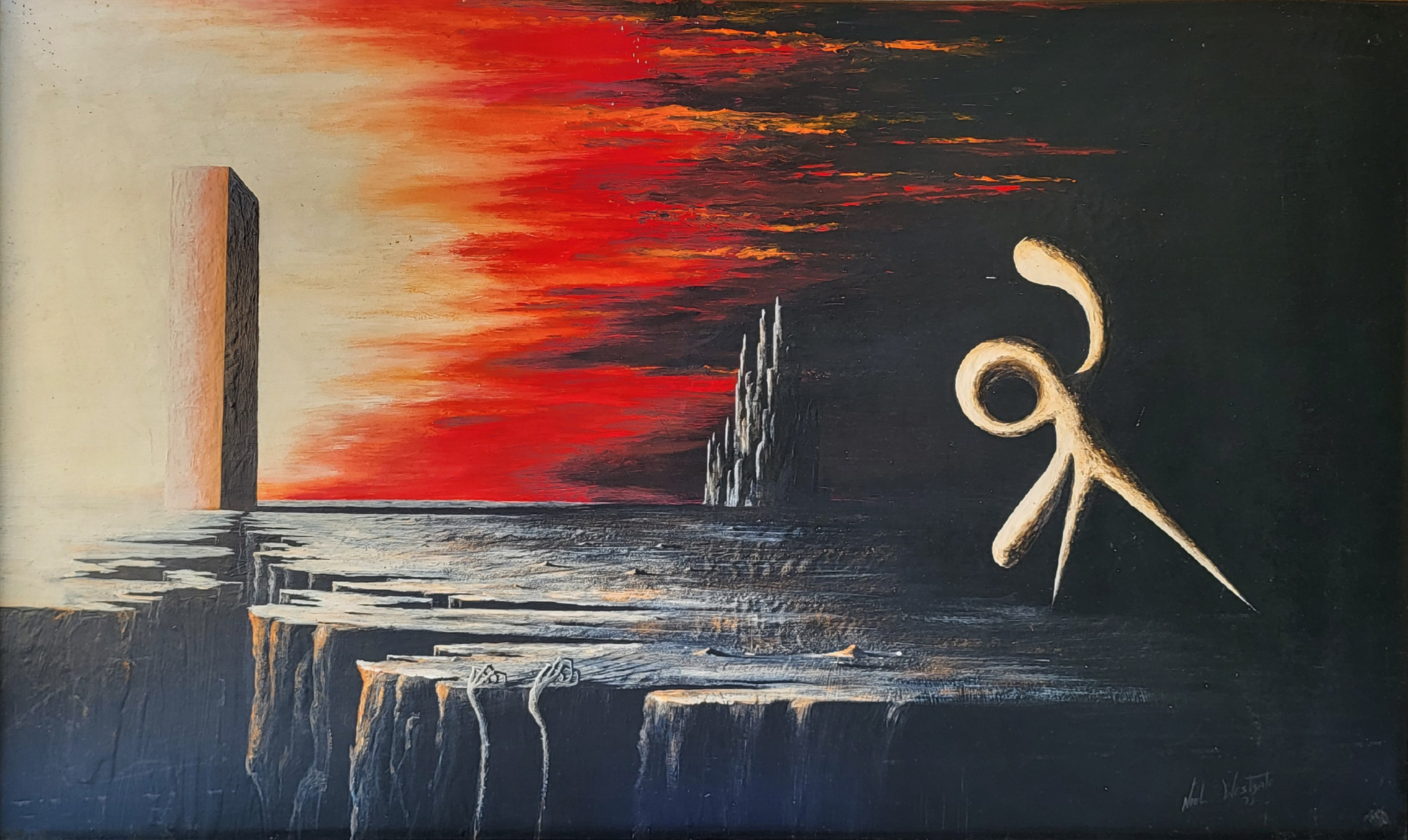
Armageddon
1973 | Oil on board
Armageddon is a striking surrealist composition that explores themes of judgement, isolation and the uncertain future. A monumental monolith rises from a fractured landscape beneath a dramatic blood-red sky, while a distant crystalline city and enigmatic symbolic figure occupy the darkness beyond.
The work employs strong tonal contrasts and heavy impasto to create a sense of tension between light and shadow, hope and destruction. Executed during the height of Cold War anxiety, the painting reflects the era's fascination with existential questions and symbolic rather than literal storytelling.
Westgate's restrained palette of black, white, crimson and ochre reinforces the emotional intensity, producing an image that remains visually compelling decades after its creation.
-
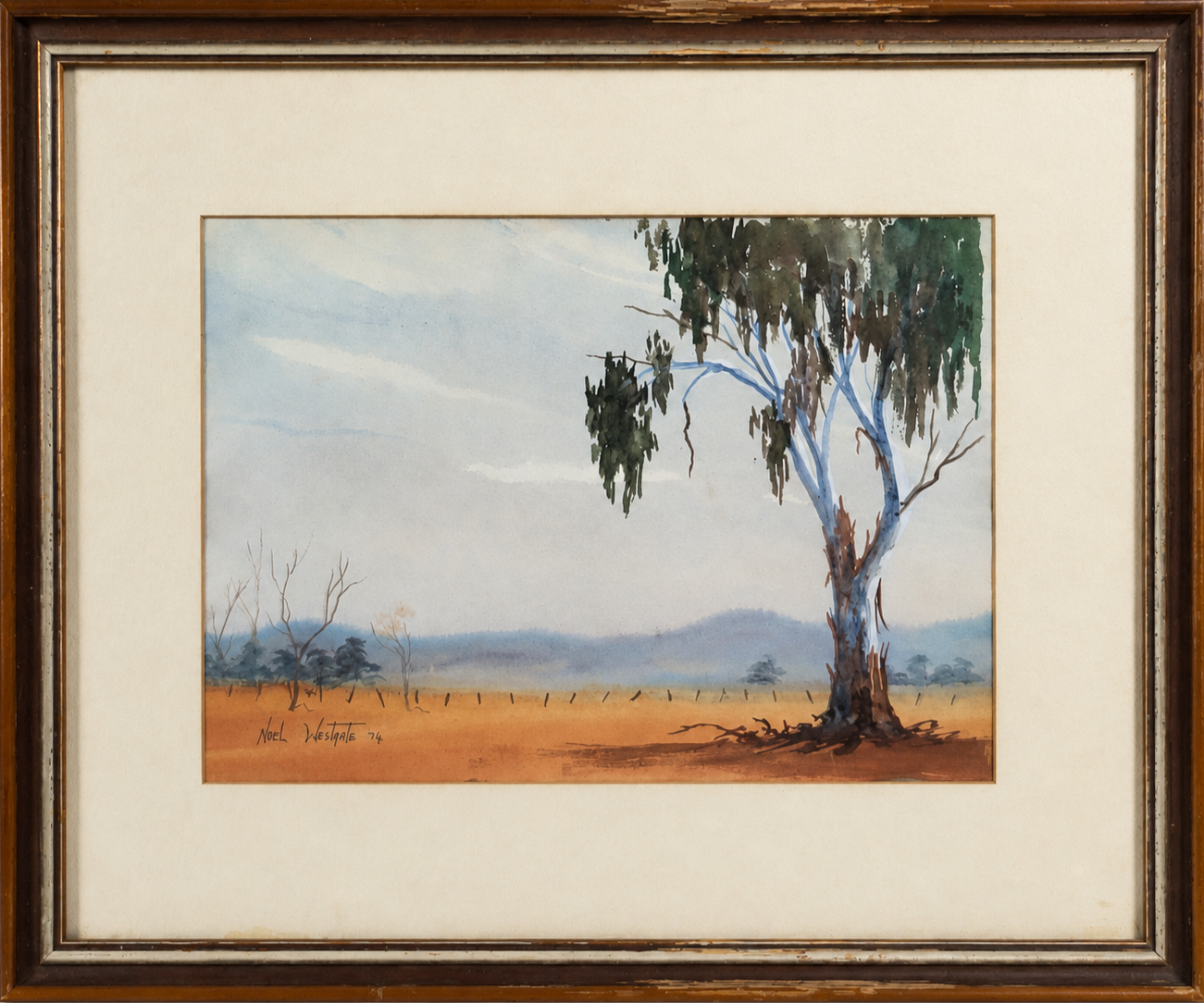
The Outback
1974 | Watercolour on paper
The Outback is a restrained and contemplative watercolour depicting the quiet vastness of the Australian inland. A solitary river red gum dominates the foreground, its cool blue-grey trunk contrasting against warm ochre earth and the soft blue haze of distant hills.
Sparse dead timber and weathered fence posts reinforce the isolation of the landscape, while the expansive sky lends the composition a strong sense of openness and distance. Unlike Westgate's more dramatic oils of the same period, The Outback demonstrates a quieter sensitivity.
Transparent washes, economical brushwork and subtle tonal transitions evoke the stillness of the Australian bush rather than its harshness, highlighting the artist's versatility across different media.
-
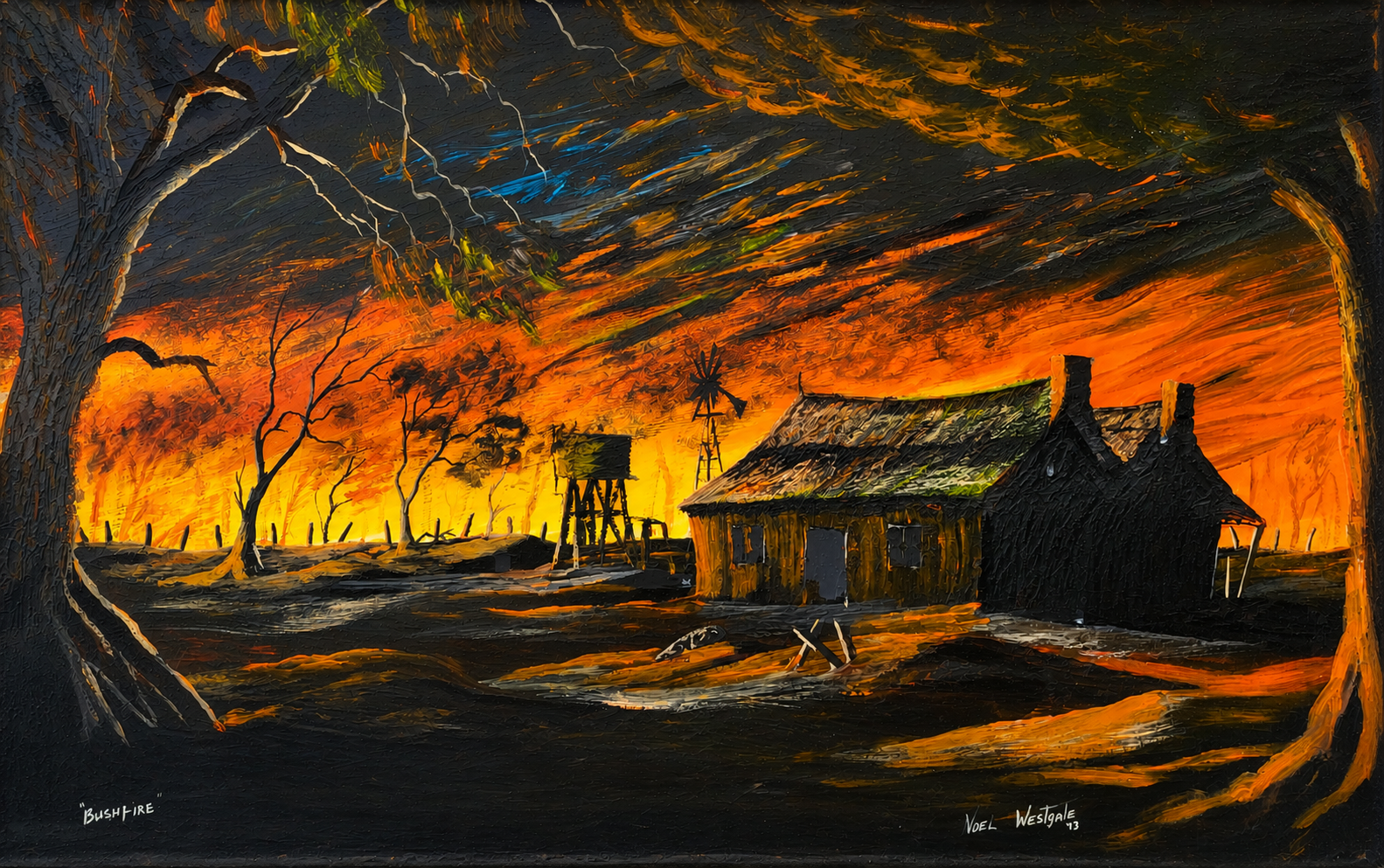
Bushfire
1973 | Oil on board
Bushfire is a dramatic depiction of the Australian landscape under the threat of fire.
A solitary farmhouse, water tank and windmill stand silhouetted against an advancing wall of flame, while smoke-darkened skies sweep across the composition in energetic brushstrokes.
Rather than documenting a specific event, Noel Westgate presents the bushfire as an overwhelming natural force, balancing destruction with the stark beauty of Australia's fire-shaped environment.
The painting demonstrates confident handling of light and colour, with luminous oranges and yellows emerging from deep blacks and earthy browns to evoke the intense glow of a fire front.
Strong contrasts and expressive brushwork heighten the atmosphere of urgency, while the isolated homestead lends the work a distinctly Australian sense of resilience and vulnerability.
-
Noel Westgate's paintings demonstrate a deep understanding of Australia's diverse landscapes. His work captures more than topography; it conveys the atmosphere, light, and quiet character that make each place unique.
Rather than seeking dramatic spectacle, Westgate focuses on the enduring qualities of the landscape. His paintings invite viewers to appreciate familiar scenes through careful observation, revealing beauty in the ordinary and permanence within a changing environment.
-
Underlying Westgate's work is a strong foundation of technical discipline. His confident handling of perspective, composition, and tonal balance allows each painting to communicate with clarity and purpose.
His brushwork is deliberate rather than excessive, demonstrating an understanding that successful landscape painting relies as much on thoughtful simplification as it does on intricate detail. This restraint gives his work a timeless quality that continues to resonate with contemporary audiences.
-
Westgate possessed a keen sensitivity to the changing qualities of Australian light. His use of colour reflects the distinctive hues of the Australian environment, from warm earth tones and expansive skies to the subtle variations found in native vegetation and waterways.
Rather than overwhelming the viewer, his palettes create harmony and atmosphere, allowing each composition to evoke a genuine sense of place while remaining faithful to the landscape itself.
-
The enduring appeal of Noel Westgate's work lies in its honesty. His paintings neither idealise nor diminish the Australian environment; instead, they celebrate its quiet dignity, resilience, and timeless beauty.
Each work becomes a record not only of a location, but of an artist's thoughtful engagement with the land. In doing so, his paintings encourage viewers to look more closely at the landscapes that surround them and to recognise the stories held within them.
-
The inclusion of Noel Westgate's work within The Lorraine Foundation Collection reflects Lorraine Saltmarsh's appreciation for artists who shared her respect for Australia's landscapes and artistic traditions.
His paintings broaden the Collection by offering another perspective on the Australian experience—one grounded in careful observation, technical excellence, and a lasting connection to place. Together with the works of Lorraine Saltmarsh and Jan Barnett, they contribute to a collection that celebrates Australia's artistic heritage through diverse voices united by a shared appreciation of the land.